
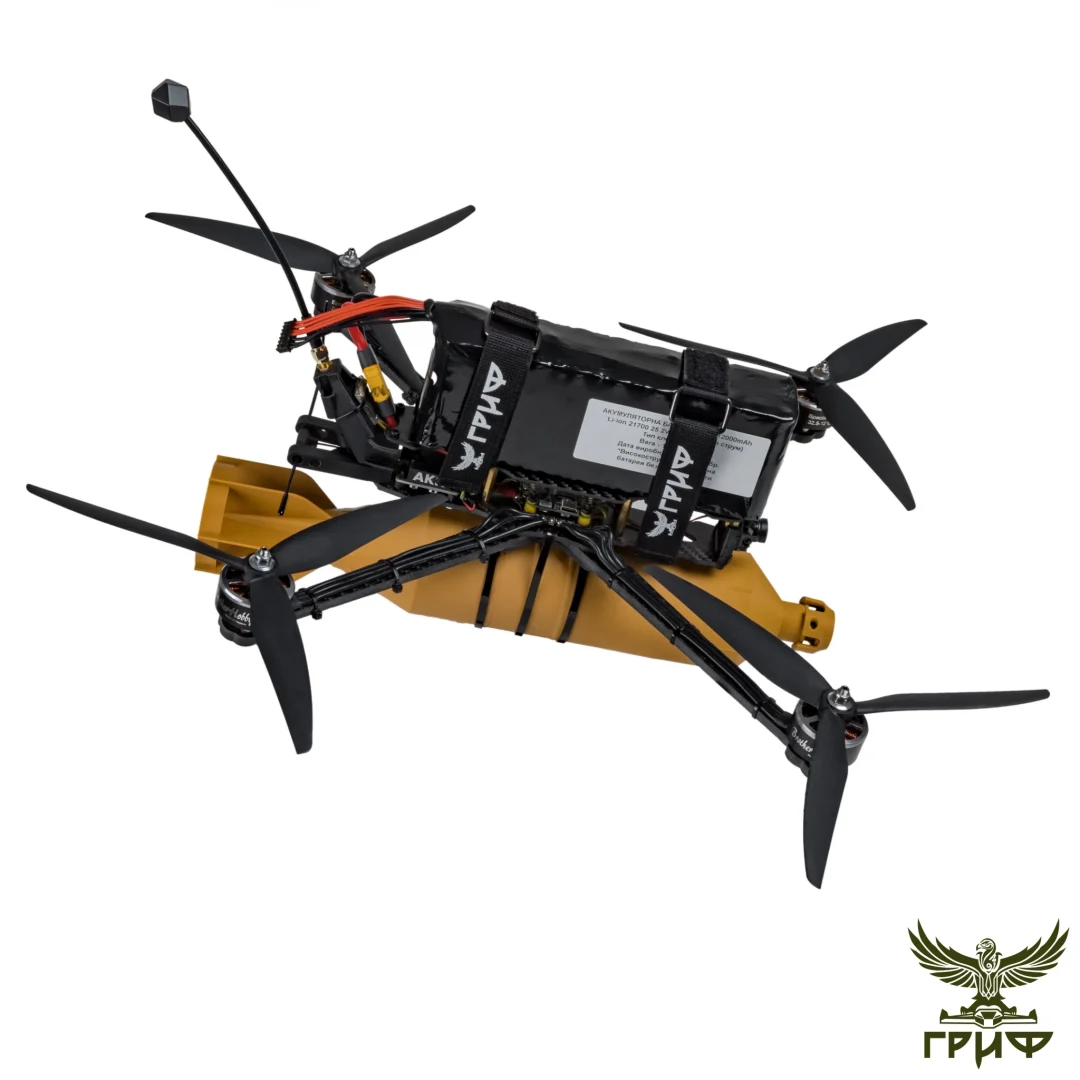


Everything you need to know about batteries for FPV drones
Article content
- What is a drone battery and how does it work?
- How to choose a battery for an FPV drone
- How to properly use and store the battery
- Maintenance and extending the life of drone batteries
- Common battery problems and solutions
- Energy logistics tactics on the front lines
- Durability and financial efficiency
- Conclusion
Ukrainian UAV units have been proving for many years that the mobility and flexibility of copters are one of the key advantages on the battlefield. However, without a reliable power source, even the best drone remains just a set of plastic and metal. It is the drone battery that determines how far the operator can fly to the target, how long the relay system will stay in the air, and how quickly the device will return with intelligence. Because of this, the topic of batteries goes beyond the hobby and becomes strategic for the Armed Forces of Ukraine, volunteers, and technical enthusiasts who support the front.
Below is a comprehensive yet practical guide on how to select, operate, maintain, and dispose of batteries for FPV drones in the field. We will focus specifically on military applications: flying under fire, storing in trenches, minimum resources, maximum results.
What is a drone battery and how does it work?
Before we get into the technicalities, let’s get to the basics. A battery for an FPV drone consists of several electrochemical cells connected in series (to increase voltage) and in parallel (to increase capacity). Each cell is a closed “laboratory” where, during discharge, lithium-ion carriers move from the anode to the cathode through the electrolyte, giving electrons to your ESC and video transmitter. During charging, the process goes in the opposite direction. The high currents typical of FPV place strict demands on the cells: low internal resistance, stable chemistry, precise temperature control.
Types of batteries for drones: LiPo, Li-ion, NiMH, NiCd
Before choosing a specific battery for your drone, it’s important to understand what chemistries exist and why some are better suited for the frontline while others are only for support equipment. Each type has its pros and cons in terms of current load, temperature resistance, explosion hazard, and cost.
- LiPo (lithium polymer) are the most common in combat FPV: they produce a pulse current of over 100 C, weigh from 170 g (6 S × 1000 mAh) and are suitable for quick “burning” on short flights.
- Li-ion (cylindrical 18650/21700 or HVLI packs) are chosen where a quiet 30-minute flight over enemy rear is needed. Their current is lower (20-30 A per cell), but the capacity per kilogram is significantly higher.
- NiMH/NiCd are almost never used in military FPV due to their excessive weight and low energy efficiency, but it is worth knowing that these chemistries are explosion-proof and frost-resistant. They are sometimes used in ground controls or backup power systems.
By knowing these four groups, the operator can consciously plan the energy of the mission and not blindly rely on “what was in the box.”
Main characteristics of drone batteries: capacity, voltage, C-rating, weight
Once the type of chemistry is chosen, it remains to figure out how to read the labeling. Four parameters determine whether the drone will have enough power to reach the target and return (unless it is a kamikaze).
- Capacity (mAh) is the “tank size.” For a 5-inch front-facing drone, 1500-1800 mAh at 6 S usually gives 6-7 minutes of practical duration.
- Voltage is the number of series cells (“S”). More S = more efficient motor mode, but also increases risks.
- The C-rating determines the maximum safe current: 100 C for 1300 mAh = 130 A peak. In reality, it is better to plan for 60-70% of the declared value to avoid overheating.
- Weight is the enemy of endurance. The 1/5th copter weight = battery weight rule for an FPV drone is the gold standard that UAV crews strive to meet.
The main thing is to find a balance: the battery for the drone should be capacious enough to complete the task, but not turn the aircraft into an unwieldy “brick-fly”.
How to choose a battery for an FPV drone
Battery selection for drones in combat conditions is different from civilian ones: armored vehicles, limited charging infrastructure, frost/heat, and fire hazards are added.
Selection by drone type and mission profile
For “kamikazes” (FPV bombers with explosive payloads), instantaneous thrust is critical: a typical configuration is LiPo 6 S × 1100-1200 mAh with 120 C. The weight is minimal so that there is enough reserve for an evasive maneuver and a double approach.
Medium-range scouts (5-7 inches, 150 g optics load) fly longer: they install either a 6 S LiPo × 1800-2200 mAh 90 C, or a hybrid 4 S Li-ion × 4000 mAh. The current is lower, but the capacity allows you to circle the area for up to 18 minutes.
Aerial repeaters and search copters sometimes switch to pure Li-ion 6 S × 5000-6000 mAh (consists of 12 21700 cells): up to 35 min of effective operation at 65 km/h.
Balance between capacity, weight and size
Any “overweighting” negatively affects the maneuverability and visibility of the drone. Empirical ratio: every +10 g of battery reduces the payload by 8-9 g or subtracts 3-4% of the range. Therefore, during a “double ammunition charge” (two RGD-5 grenades), it is better to take two smaller batteries and connect them via a switch than to drag one heavy 2300 mAh.
Popular brands and models of batteries for FPV drones
On the Ukrainian front, the choice is dictated not so much by marketing as by proven reliability and availability. Below are five packages that have proven their reliability.
- Tattu R-Line 95 C (original). Lasts 200-500+ cycles before losing 20% capacity, has low IR and stable C-rating.
- CNHL Black Series. A popular “workhorse” among volunteers, one of the best price/resource ratios, available in 4-8 S formats.
- GNB Yellow. Lightweight packs that are especially appreciated by operators of small “mavic” conversions: the weight of 6 S × 1050 mAh is only 168 g.
- Bonka Power 1300 mAh 6 S 120 C. Famous for its endurance to high temperatures; the drone battery does not “bloat” even after several series of intensive flights.
- HRB Graphene 1500 mAh 6 S 100 C. Graphene-enhanced chemistry provides better heat dissipation and longer life; increasingly appearing in UAV units of the Armed Forces of Ukraine.
The presence of several proven brands at once allows crews to plan logistics flexibly: expensive Tattu for critical missions, “unkillable” Bonka for training and serial “outings,” lightweight GNB when you need to save every gram of explosives.
Choosing a battery is a compromise between budget, availability, and combat mission, and most importantly, no model, even the most expensive, forgives careless handling.
How to properly use and store the battery
Proper operation extends the service life and, more importantly, reduces the risk of fire in the dugout.
Before we get into the algorithms, let’s understand a key principle: lithium is a capricious metal. A lithium battery for a drone’s FPV will become aggressive if you exceed the limits of temperature, voltage, and mechanical integrity. That’s why we spend 10 minutes of pre-flight time checking it — and save hours of equipment repairs and medical evacuations.
Charging process and safe charging methods
Charging “at the range” is done in trailers, cars, and shelters. Before starting:
- Check the cables, XT60/XT30 connectors, and balance plugs for cracks.
- Turn on Balance Charge mode at 1 C. For 1550 mAh this is 1.5 A.
- The package should cool to <30 °C after flight. A hot LiPo drone FPV battery will catastrophically lose its life.
When charging, place the charger on a non-flammable plate (ceramic or metal), and put the packs in a LiPo bag. Even in the absence of 220 V utility power, fighters use inverters from car generators, EcoFlow, and other devices, but they advise strictly controlling the voltage – surges can burn the charger’s BMS.
After the cycle is complete, a manual shutdown is mandatory: leaving the LiPo unattended is too risky, especially when there are ammunition around. Additionally, it is advised to immediately label the packages with a “charge-storage-discharge” marker to avoid confusion in the dark. A small mark saves precious seconds under fire.
Storage and transportation of batteries
У бліндажі: постійні коливання вологості й температури шкодять LiPo. Тому батареї для дронів за можливості варто зберігати у герметичних металевих ящиках з осушувачем (сілікагель у пакетиках). Оптимальна температура +15 °C; вологість <60%. Якщо бліндаж сирий, ставте ящик на дерев’яну підставку, щоб уникнути конденсату.
In transport: it is better to transport in fire-resistant bags, and separate each bag with foam rubber. The terminals are closed with rubber caps so that a fragment does not cause a short circuit.
Protection against overcharging, overheating and mechanical damage
FPV-LiPo does not have a built-in BMS, therefore:
- Set the threshold in Betaflight/INAV to 3.5 V/bank on the tele-tube.
- Set a current limit on the ESC (Current Limiter) so the motors don’t suddenly “suck out” the package.
- Use a 3D printed XT60 connector protector that will absorb the impact of a hard landing.
After each combat mission, inspect the battery case: any puncture > immediate disposal.
Maintenance and extending the life of drone batteries
In a combat zone, a new battery for a drone arrives less often than a new batch of propellers or ESCs, so we “squeeze” out the maximum number of cycles.
Regular inspections and balancing of cans
Every 10 cycles, slowly charge the packs in Storage mode, then discharge to 3.8 V/bank, measuring the internal resistance. A value of >2 mΩ for 6 S × 1500 mAh indicates aging. It is important to keep a journal: mark the date and number of cycles with a pen on the case. This helps company and battalion masters plan logistics.
How to tell when your battery needs replacing
Signs that the battery for your FPV drone is worn out:
- When starting, the voltage drops below 19 V in the first 3 seconds — the package “dies”.
- Immediately after the flight, the temperature is > °C even in +5 °C air.
- The difference between the banks after full charge>.05 V.
If any point occurs, we put the battery into “training” mode (equipment calibration, static ground tests). Deflated batteries are not used even there.
Tips for extending service life
Reduce the maximum charge voltage to 4.18 V – the loss of thrust is imperceptible, and additional cycles are felt immediately. Do not keep a fully charged pack for more than 24 hours: practice shows that this reduces the resource by 15% after 50 cycles. Also, never charge batteries in the cold: lithium is covered with metal dendrites, which leads to an internal short circuit.
The statistics remain unchanged: the average LiPo drone FPV battery can withstand 300 full cycles, and with careful handling – up to 500.
Common battery problems and solutions
Front practice suggests that batteries most often fail due to improper charging.
Excessive heating and overheating
The most common scenario is a copter with a suspended kilogram cumulative charge, a 6 S × 1200 mAh drone battery, and 2807 motors “pull” 130 A. At the peak, the package heats up to +80 °C. Solution: take 1500 mAh of the same series with a higher C-rating or limit the gas programmatically. To evacuate an overheated battery, keep a bucket of sand in a shelter: water does not extinguish lithium.
Loss of capacity
If you see in the logs that the flight time has decreased from 6 minutes to 4 minutes, but the grams of cargo are the same, then the package has worn out. Check the IR and measure the real capacity with a charger-tester. If the value has dropped below 80% of the nominal value, transfer the drone battery to the training category or dispose of it.
Physical damage and safe disposal
After the debris arrives, the package may smolder imperceptibly. Examine it in the light: even a small black dot that burns your finger poses a fire hazard. Disposal: Carefully transfer the damaged battery to a fireproof pit, discharge it to 0 V using a 12 V lamp, fill it with saline solution for a day and take it to a hazardous waste disposal point.
Energy logistics tactics on the front lines
Frontline conditions require a separate word about infrastructure. Most mobile charging stations consist of:
- gasoline generator 2-3 kW,
- inverter 24 V – 220 V,
- 12 V step-down converter for radio stations,
- several ISDT or ToolkitRC balance chargers.
To avoid getting into trouble, create a rotation schedule: while one group flies, the second charges the batteries, and the third cools the packages and keeps records. The evening “window” is the ideal time for the greatest approach to the generator, when the artillery noise background is reduced and there is less chance of being intercepted by enemy acoustic systems.
Durability and financial efficiency
Volunteer, departmental, and own funds are limited, so the arithmetic is simple:
- Price Tattu R-Line 6 S × 1500 ≈ $88,
- predicted resource = 350 cycles,
- cost of one flight = $0.25.
For CNHL Black Series, this figure is even lower — $0.18 per flight, so commanders often give them to “newbies,” leaving Tattu for priority flights.
Conclusion
A reliable drone battery is the key to the success of your drone. It determines whether you can complete the task and return. A drone battery should last a long time, but only if used properly: moderate currents, disciplined charging, temperature control, and systematic checking of elements.
Remember the key rules:
- Plan: choose your drone battery for each mission.
- Protect: physical barriers in transport and dugouts save not only equipment, but also lives.
- Maintain: A simple cycle log and regular “balance” prolongs the service life.
The Drongrif team recommends always having at least three sets of batteries per crew, keeping them in rotation, and never skimping on a quality charger — it’s the main shield against fire.

Ready-to-fly aviation complex with remote control, tablet, mast-mounted repeater, FPV goggles, and 500 drones in the set
Warning: Undefined array key 1 in /home/hryf/drongrif.com/www/wp-content/themes/Proacto-Theme/template-parts/blocks/pr-products-sidebar.php on line 40
0
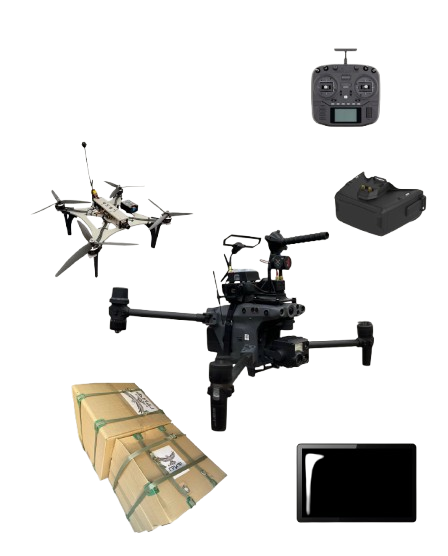
A complex with a Mavic charging station, a repeater and full support for combat missions.
Warning: Undefined array key 1 in /home/hryf/drongrif.com/www/wp-content/themes/Proacto-Theme/template-parts/blocks/pr-products-sidebar.php on line 40
0

FPV drone 10 for strike missions. Operating range up to 20+ km, combat load up to 3 kg. Ideal for mass use.
Warning: Undefined array key 1 in /home/hryf/drongrif.com/www/wp-content/themes/Proacto-Theme/template-parts/blocks/pr-products-sidebar.php on line 40
0

Powerful drone with anti-radar capabilities. ERLS system at frequencies of 520-2700 MHz. Combat load 2.5 kg, operational flight range — 25 km.
Warning: Undefined array key 1 in /home/hryf/drongrif.com/www/wp-content/themes/Proacto-Theme/template-parts/blocks/pr-products-sidebar.php on line 40
0
Frequently asked questions
-
How to avoid damage when storing batteries?
Hold the battery for the FPV drone at 3.8 V/cell, in a dry metal container and do not allow direct sunlight to heat the case. Add a few packets of silica gel and check their saturation once a month – it’s a penny expense, but it weighs years of resource.
-
How many charging cycles can a battery withstand?
According to the XT Battery technical report (2025), a standard LiPo survives 300 full cycles before capacity drops by 20%., and when limiting the depth of discharge to 70% – 500 cycles. Li-ion lasts up to 800 cycles under the same conditions, but is only suitable for medium currents.
-
Why is it important to balance LiPo batteries?
The imbalance creates a “weak” bank that will be the first to drop below 3.0 V while the rest hold 3.6 V. This causes local overheating and, in the worst case, thermal runaway. Balance charging compares the voltage in each cell and charges the laggards to the general level, minimizing the risk.