


Fiber Optic FPV Drone: What It Is and How It Works
Article content
- What is a fiber optic drone?
- The principle of operation of a fiber optic drone
- Key features of using FPV drones on fiber optics
- Advantages of using FPV drones on fiber optics
- Disadvantages and limitations of fiber-optic drone technology
- What is the flight range of fiber optic drones?
- Areas of application of fiber optic drones
- Are there effective countermeasures?
- Conclusions
Unmanned systems play an important role in both civil and military spheres. Among the effective solutions, a fiber-optic drone stands out, combining high-quality communication and resistance to interference. Such a device is able to work where conventional radio channels become powerless.
To understand its capabilities, it is important to understand what a fiber-optic drone is and what tasks it performs.
What is a fiber optic drone?
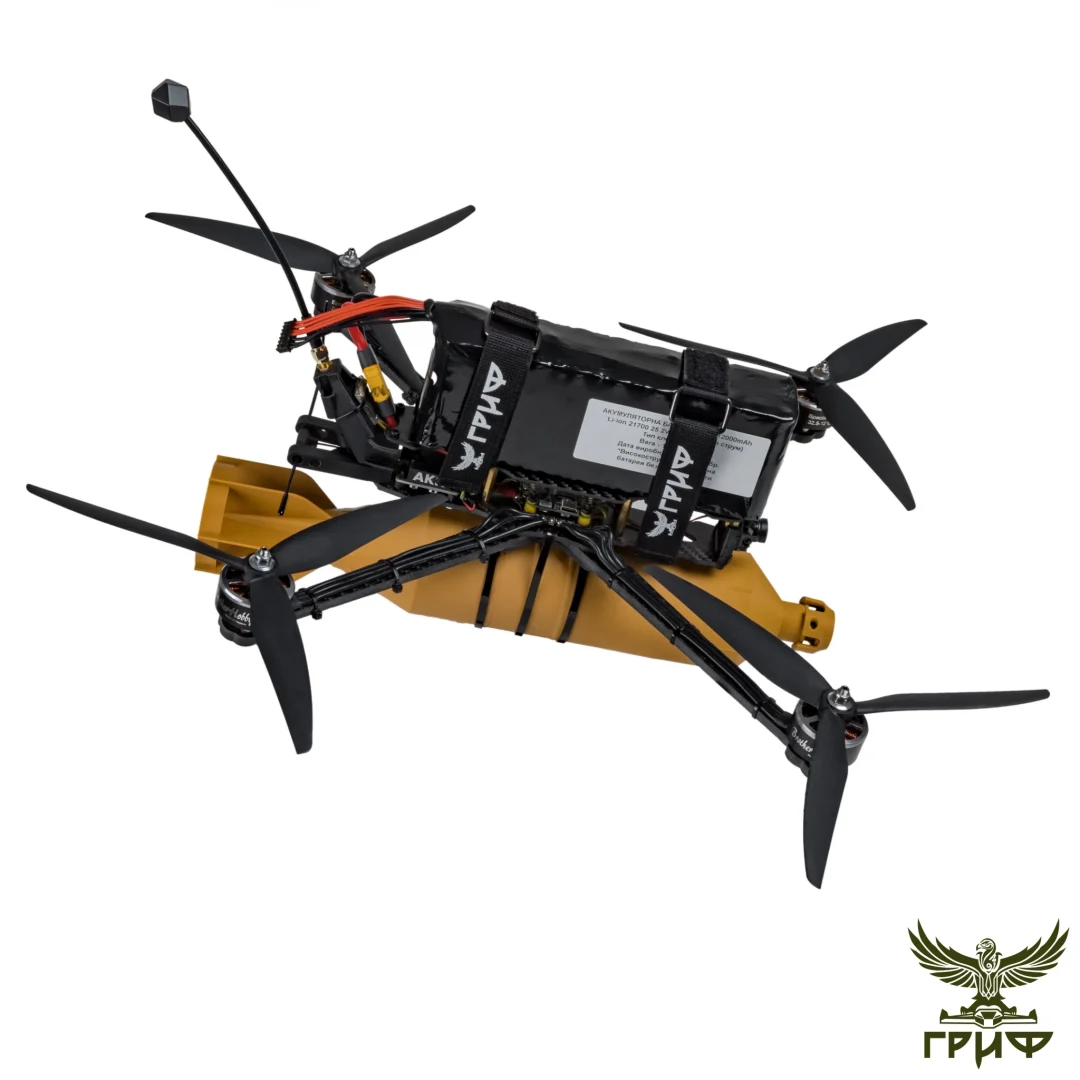
A fiber-optic drone is a modern type of device that receives signals from the operator via a special fiber-glass cable. It is not affected by electronic interference or jamming, unlike classic models. It is equipped with a control module, a video system, a camera, and often additional elements, including GPS.
In addition to the technical specifications, it is important to know what a fiber optic drone looks like. Outwardly, it is similar to a classic quadcopter, but always has a coil with a cable.

The principle of operation of a fiber optic drone
To understand how a fiber optic drone works, let’s look at the main points:
- the operator uses the remote control to control in digital format;
- the signal is converted into optical and travels along the fiber to the coil on board;
- the video stream from the board is returned via the same or a separate channel;
- during flight, the cable is wound or unwound from a coil;
- A station with a media converter and power supply system is installed on the ground.
This principle allows you to maintain a stable signal at any available distance within the cable length.
Key features of using FPV drones on fiber optics
Today you can buy a drone on fiber optic to perform various specialized tasks. Unique characteristics make these drones indispensable in certain conditions. The key point is the physical connection between the drone and the operator, which completely eliminates the risk of signal jamming.
But there is one important aspect: a fiber-optic FPV drone requires careful flight planning. The person flying it must take into account all potential obstacles that could damage the cable.
Advantages of using FPV drones on fiber optics
A fiber-optic drone has a number of advantages. It becomes a reliable assistant for the military in places where traditional wireless models lose their effectiveness.
Stable connection without interference
A fiber optic FPV drone receives commands directly through the cable. This means that the communication is independent of radio waves and is not subject to external interference. This allows the operator to operate in the most challenging conditions.
Protection against signal jamming
While the enemy is jamming radio channels, the fiber-optic FPV drone continues to operate – the cable is not susceptible to traditional electronic warfare. Therefore, fiber-optic solutions are often chosen for serious reconnaissance and strike missions.
High quality data transmission
A fiber-optic drone allows for simultaneous transmission of high-definition video and telemetry, which is essential for precise guidance and real-time decision-making.
Disadvantages and limitations of fiber-optic drone technology
Despite its significant advantages, the technology has its weaknesses. But they are not as critical compared to the advantages of using it.
Limited range due to cable length
A fiber-optic drone, whose flight range is determined by the length of the cable, has a natural limitation. Its movement is always related to the amount of coil that the operator can use.
Difficulty in use in the field
If you plan to operate such a quadcopter, you should undergo special training. The operator must ensure that the wire does not become tangled, frayed, or caught on obstacles in the terrain. Sometimes additional personnel may be required.
Higher cost compared to conventional FPV drones
Fiber-optic drones are more expensive to manufacture and maintain due to the complex mechanism and use of specialized materials. This, of course, affects the overall cost.
What is the flight range of fiber optic drones?
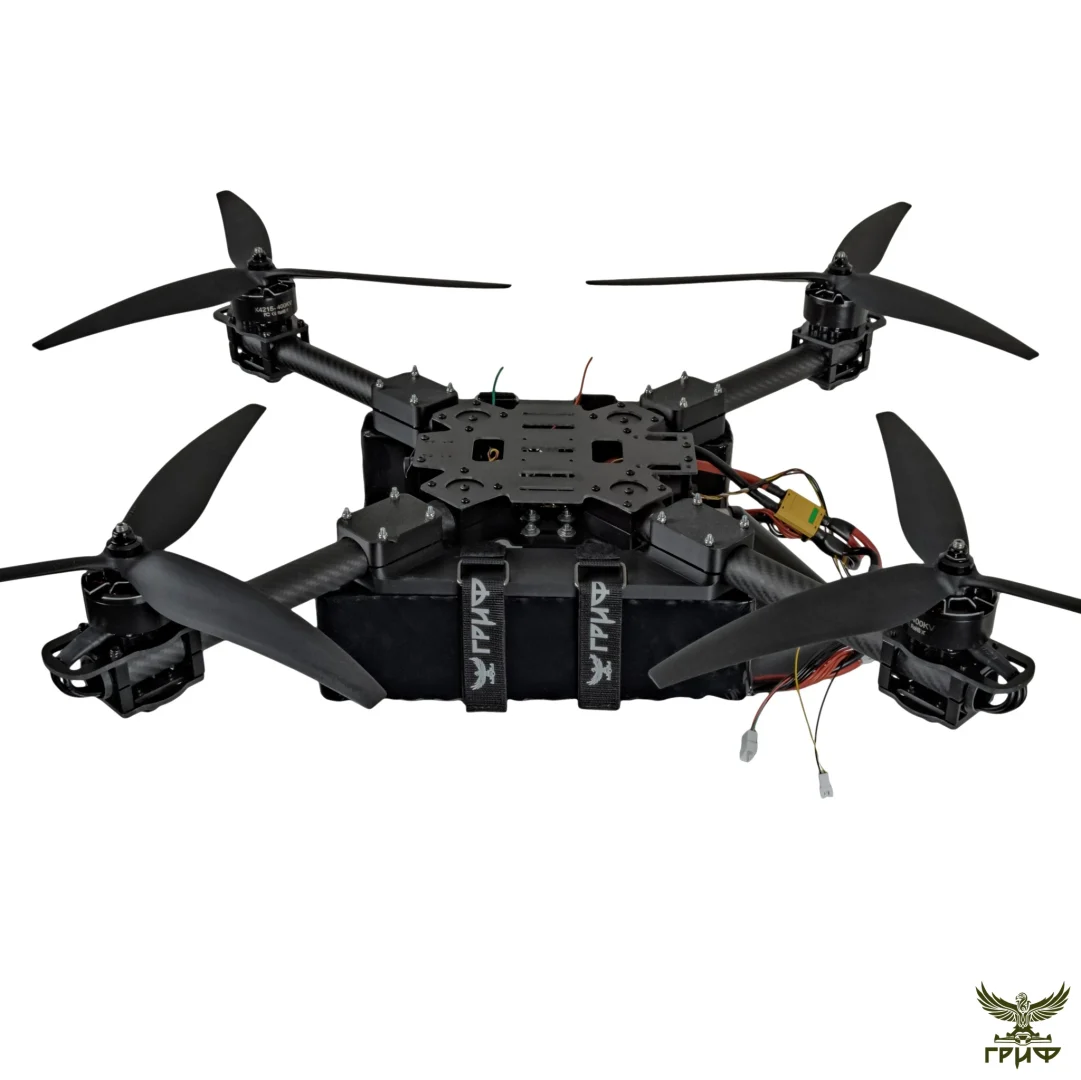
The limitations that a fiber-optic drone has on range are determined by the design of the device and its parameters. For example, the GRIF-Opto 15 has coils for 15 and 20 km. This is a serious indicator for some tasks.
Areas of application of fiber optic drones
Fiber optic FPV systems have a variety of operating options. Let’s consider where this technology is most often used.
Peaceful use
How does a fiber optic drone work in civilian life? In domestic and commercial areas, they are useful for:
- infrastructure inspections;
- electrical network inspections;
- monitoring of industrial facilities;
- environmental control.
In addition, a fiber optic FPV drone can be used in cinematic filming.
Military use
This technology has proven itself very effectively in modern warfare. The military uses fiber-optic FPV drones to:
- reconnaissance in active jamming zones;
- fire adjustment;
- monitoring enemy movements;
- real-time video transmission.
This is where its main advantages are felt – a stable signal and security.
Are there effective countermeasures?
Due to the specifics of the technology, dealing with such drones is more difficult. Jamming does not work, and mechanical interception requires special equipment. In most cases, countermeasures are reduced to physical damage to the device itself or cutting the fiber-optic cable.
Conclusions
A fiber-optic drone is a new stage in the development of unmanned technology. It solves problems that conventional FPV drones cannot cope with.
Ukrainian developers offer industrial fiber-optic solutions that demonstrate reliability and effectiveness in real combat conditions.

Ready-to-fly aviation complex with remote control, tablet, mast-mounted repeater, FPV goggles, and 500 drones in the set
Warning: Undefined array key 1 in /home/hryf/drongrif.com/www/wp-content/themes/Proacto-Theme/template-parts/blocks/pr-products-sidebar.php on line 40
0
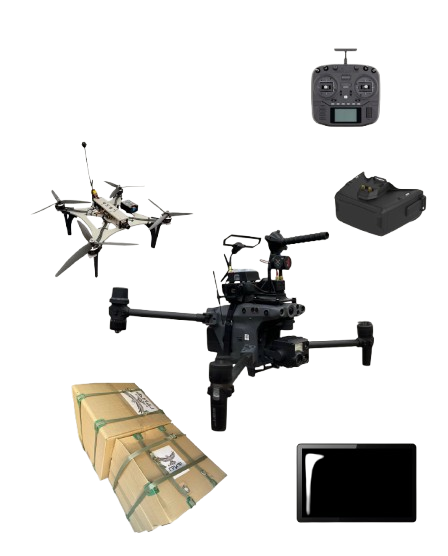
A complex with a Mavic charging station, a repeater and full support for combat missions.
Warning: Undefined array key 1 in /home/hryf/drongrif.com/www/wp-content/themes/Proacto-Theme/template-parts/blocks/pr-products-sidebar.php on line 40
0

FPV drone 10 for strike missions. Operating range up to 20+ km, combat load up to 3 kg. Ideal for mass use.
Warning: Undefined array key 1 in /home/hryf/drongrif.com/www/wp-content/themes/Proacto-Theme/template-parts/blocks/pr-products-sidebar.php on line 40
0
Frequently asked questions
-
Why choose fiber-optic drones over wireless models?
The main advantage is a stable signal and no risk of jamming. This is critically important for military and industrial tasks.
-
How reliable is the communication between the drone and the operator via fiber optic cable?
A fiber-optic FPV drone transmits information directly over the cable. This gives the operator a continuous channel without loss or delay.
-
Is it possible to upgrade a regular drone to be controlled by fiber optics?
Technically, this is possible, but it requires complex modifications: installing a new control module, integrating a cable, and adapting it to the station. It is easier to purchase a model designed to work with fibre optics right away.
