


What is a UAV: definition, types of drones and applications
Article content
- What is the abbreviation for UAV and what does this term mean?
- What is a drone and how is it different from a UAV?
- The history of the development of UAVs: from the first models to the present day
- Classification of drones by design
- Classification of UAVs by size and weight
- Types of Drone Control: What are FPV, GPS, and AI?
- Purpose of UAVs: civil and military drones
- UAVs in the Armed Forces of Ukraine: what drones are used and how to choose

Source: Freepik
Drones are one of the most powerful technological trends of our time. From amateur aerial photography to complex military systems, it is hard to imagine life without them.
Learn more about what a UAV is, what types of drones there are, and how they are used in the civilian and military sectors. We will pay special attention to classification by design, size, and control method, as well as examples of use in Ukraine.
What is the abbreviation for UAV and what does this term mean?
A UAV is an unmanned aerial vehicle that is either piloted or autonomous. It can be equipped with cameras, sensors, and artificial intelligence systems. This allows the drone to perform complex tasks without human intervention.
What is a drone and how is it different from a UAV?
Many people confuse the concepts of “drone” and “UAV”. These terms are often used as synonyms. Drone is a general name for all unmanned devices (air, ground, sea). UAV is an aircraft, that is, a drone that moves in the air.
The history of the development of UAVs: from the first models to the present day
Drones have come a long way in development from simple training models to high-tech combat systems.
-
The first drones in history
Aerial Target – the first prototype of a UAV, appeared in 1916 in Great Britain. It was used for artillery training. In the 1930s, the USA developed the Radioplane OQ-2, which became the first mass-produced military drone.
-
Military Use of UAVs
They are used for reconnaissance, artillery fire correction, pinpoint strikes, and electronic warfare. A prime example is Russia’s war against Ukraine, where UAVs have become a major element of the modern battlefield.
-
Civilian Drones: Evolution and Prospects
Since the early 2000s, civilian drones have been used for photography and videography, agricultural monitoring, parcel delivery, and even rescue operations. Some autonomous drones now operate on the basis of artificial intelligence.
Classification of drones by design
UAVs come in different designs, and this determines their maneuverability, flight duration, and purpose.
-
Multirotor drones (quadcopters)
The most popular type, which has four propellers. These multirotor UAVs are able to hover in the air and are used for filming or reconnaissance. There are also hexacopters (6 propellers) and octocopters (8 propellers), which have greater stability and load capacity.
-
Fixed-wing UAVs
These drones resemble airplanes. They fly longer and faster. Therefore, they are used for reconnaissance or surveillance of territories. Among the military models of fixed-wing UAVs is the Bayraktar TB2.
-
Single-rotor (helicopter-type)
A helicopter drone has a single main rotor and a smaller stabilizing rotor. These drones are capable of carrying cargo and are used for delivering equipment or conducting reconnaissance.
-
Hybrid VTOL Drones
Vertical Take-Off and Landing (VTOL) combines the advantages of an airplane and a quadcopter. It can take off vertically, hover over a point, and fly long distances at high speed. Therefore, a hybrid drone is convenient to use in confined spaces.
Classification of UAVs by size and weight
Drones have different characteristics that determine their purpose, flight duration, and payload capacity.
-
Micro and nano drones (up to 250 g)
Miniature nano drones are suitable for observation and training. They are compact, quiet and easy to use.
-
Small drones (250g – 2kg)
These are popular models (e.g. DJI Mavic). They are often used by the Ukrainian Armed Forces for aerial reconnaissance or photography.
-
Medium UAVs (2 – 25 kg)
These drones are already capable of carrying sensors, thermal imagers or explosives. This includes many FPV UAVs used for fire control.
-
Large drones (over 25 kg)
Large combat UAVs are used for strategic operations. They have a long range and can stay in the air for dozens of hours.
Types of Drone Control: What are FPV, GPS, and AI?
Drones differ in the way they are controlled, which determines their effectiveness and scope of application.
-
Remotely controlled UAVs
The operator controls the drone manually using a remote control, GPS or FPV camera.
The device transmits video in real time. The pilot sees everything through the drone’s eyes through goggles or a monitor. -
Autonomous drones with AI
These models use artificial intelligence (AI) to perform tasks on their own. They analyze data from sensors and can make decisions without human intervention.
-
Combined control
This is a combination of autonomous and manual modes. For example, an FPV UAV can fly to a target automatically and then switch to manual control.
Purpose of UAVs: civil and military drones
Drones perform very different functions depending on their equipment and design.
-
Civilian drones: photography, agriculture, inspection
- Quadcopters like the DJI Mavic have become indispensable in everyday life for performing various tasks:
- photo and video shooting;
- monitoring crops and fertilizer application;
- search and rescue operations.
They are also used to deliver goods to hard-to-reach or remote areas.
-
Military UAVs: Reconnaissance and Strike
It is difficult to imagine the modern battlefield without drones. They perform tasks that were previously risky or impossible for humans.

Source: Pixabay
-
Reconnaissance drones
A reconnaissance UAV collects information about enemy positions, transmits real-time video, and adjusts artillery fire. These include the Furia, Fly Eye, Raybird-3, and others.
-
Kamikaze Drones and Loitering Munitions
A kamikaze drone (such as the Shahed-136 or Switchblade) explodes during an attack, destroying the target. These UAVs are also called “loitering munitions.”
-
Drones for EW (electronic warfare)
An EW drone creates radio interference, blocks GPS signals, and can intercept the control of enemy drones.
What is an FPV drone and a deep strike?
It is a small maneuvering vehicle that is controlled in real time. Deepstrike is a long-range kamikaze drone capable of hitting targets hundreds of kilometers away.
UAVs in the Armed Forces of Ukraine: what drones are used and how to choose
Domestic UAVs have proven their effectiveness in reconnaissance, adjusting artillery fire, delivering equipment, and delivering strikes against the enemy.
Among the most famous Ukrainian drones:
- “Fury”. Operational-tactical reconnaissance UAV that operates stably in electronic warfare conditions.
- Spectator-M1. A multi-purpose drone designed for surveillance of large areas.
- Raybird-3. A high-tech device with a flight range of over 2,000 km.
- Punisher. A stealthy strike drone capable of delivering pinpoint strikes at a distance of over 40 km.
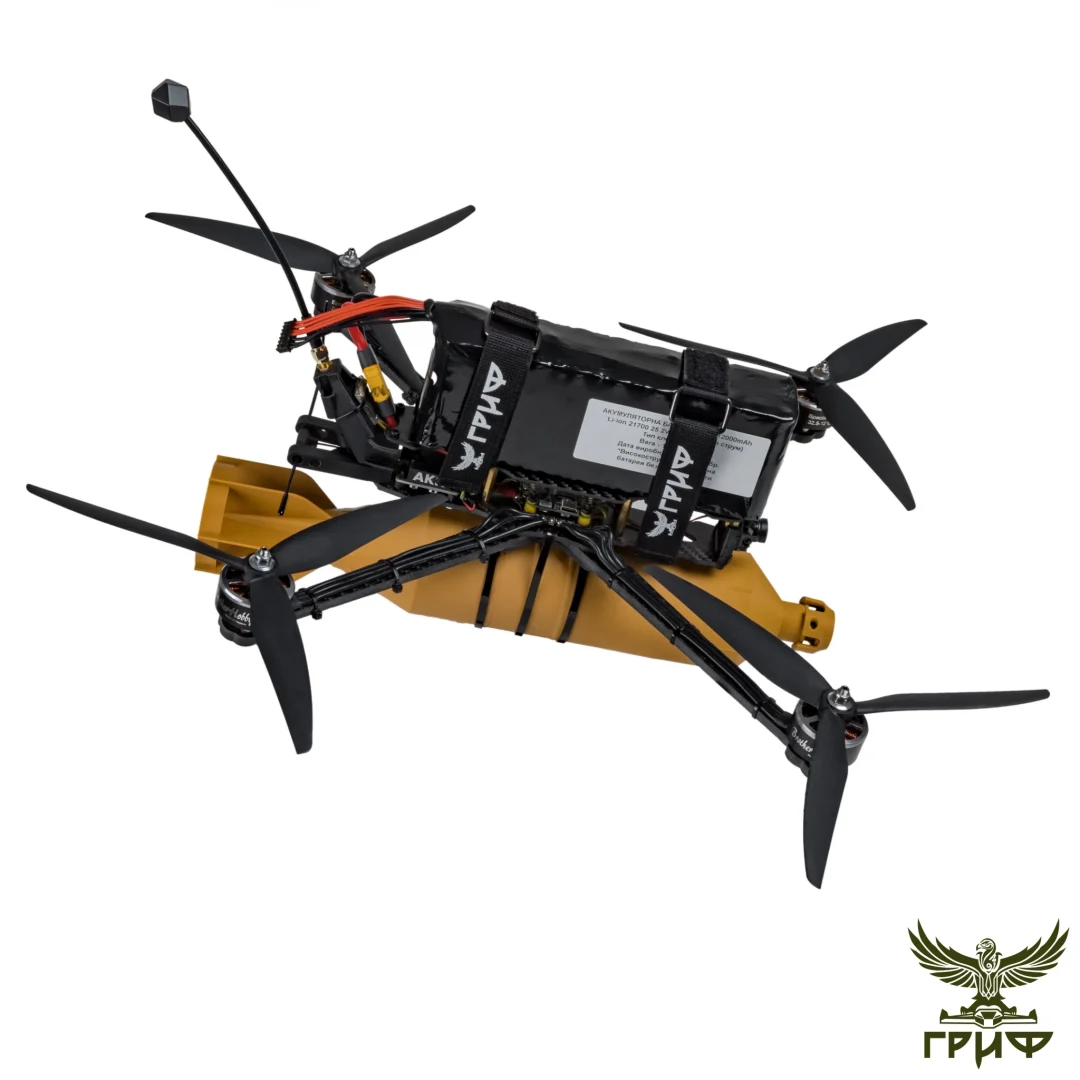
- “Griff”. FPV drone with a working range of up to 20+ km.
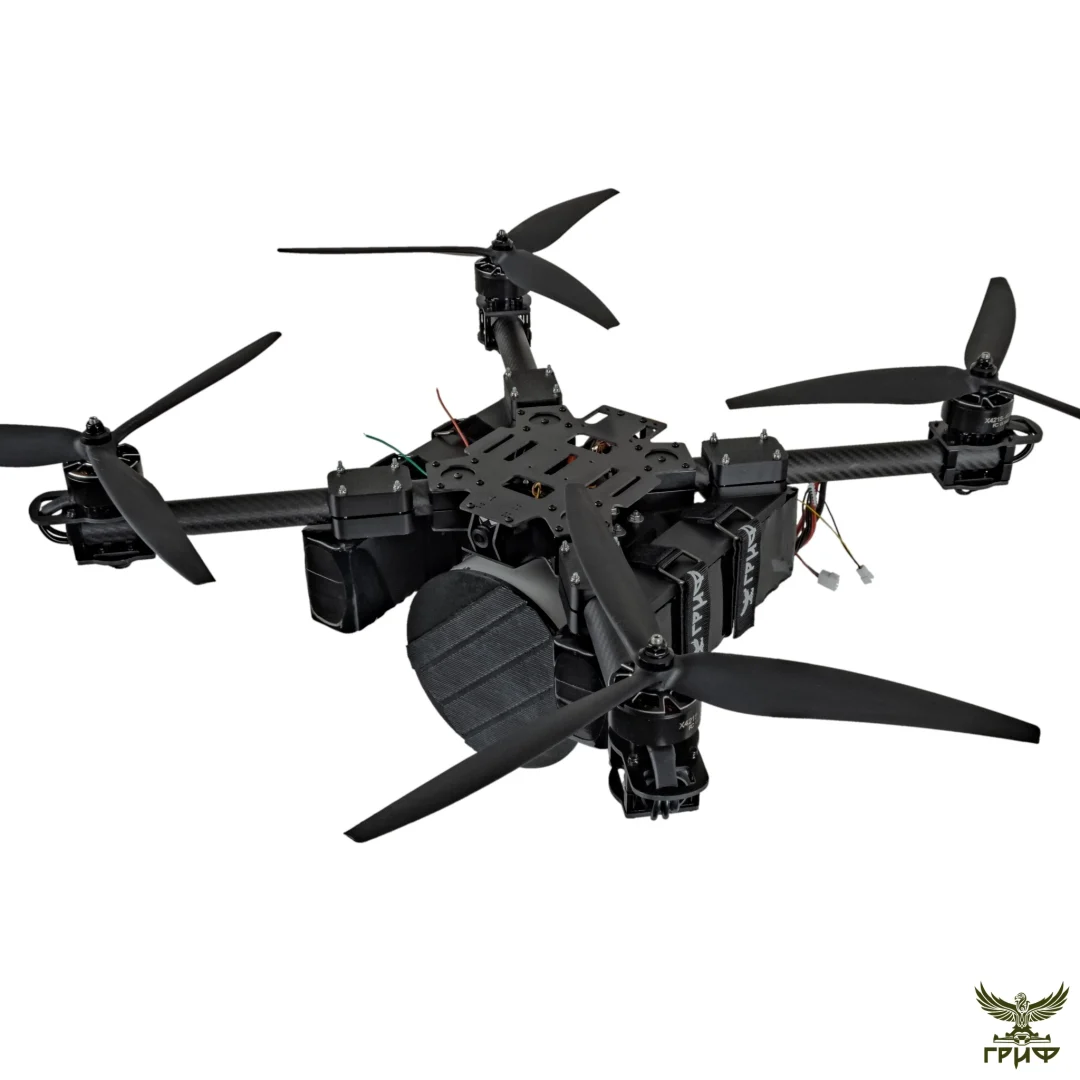
Source: DroneGrif
Our company’s engineers create high-precision systems for aerial reconnaissance and strike operations, which are actively used by Ukrainian units at the front.

Ready-to-fly aviation complex with remote control, tablet, mast-mounted repeater, FPV goggles, and 500 drones in the set
Warning: Undefined array key 1 in /home/hryf/drongrif.com/www/wp-content/themes/Proacto-Theme/template-parts/blocks/pr-products-sidebar.php on line 40
0
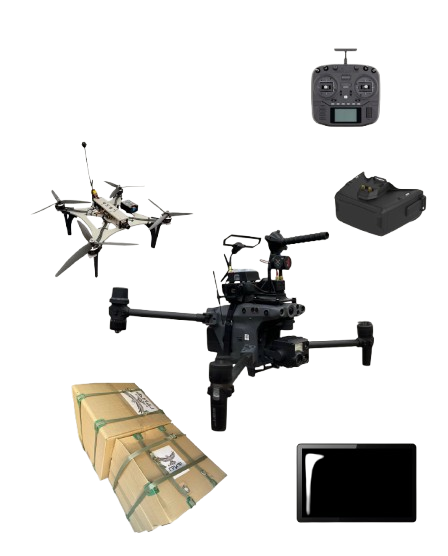
A complex with a Mavic charging station, a repeater and full support for combat missions.
Warning: Undefined array key 1 in /home/hryf/drongrif.com/www/wp-content/themes/Proacto-Theme/template-parts/blocks/pr-products-sidebar.php on line 40
0

FPV drone 10 for strike missions. Operating range up to 20+ km, combat load up to 3 kg. Ideal for mass use.
Warning: Undefined array key 1 in /home/hryf/drongrif.com/www/wp-content/themes/Proacto-Theme/template-parts/blocks/pr-products-sidebar.php on line 40
0
Frequently asked questions
-
How is UAV deciphered and what is it?
An unmanned aerial vehicle, meaning a UAV, can fly without a pilot, remotely or autonomously.
-
What is the difference between a drone and a UAV?
A UAV is specifically an aerial drone. The term “drone” can refer to any aerial, ground, or sea-based unmanned device.
-
What is an FPV drone and what is it for?
It allows the operator to see the flight from a first-person perspective. Used for precision strikes, racing or filming.
-
What types of drones are there by design?
Multirotor (quadcopters), fixed-wing, helicopter and hybrid VTOL drones.
-
Where are military UAVs used in Ukraine?
The Ukrainian Armed Forces’ drones are used for reconnaissance, fire control, strikes, and electronic warfare.


