

Military electronic warfare and electronic warfare systems: operating principles, classification and combat capabilities
Article content
- What are RER and EWR?
- Main differences between EW and RER
- Cooperation between EW and RER
- How electronic warfare works on the modern battlefield
- Electronic warfare and electronic warfare technologies and systems in Ukraine
- The role of electronic warfare and electronic warfare in warfare and modern operations
- Advantages and challenges of using EW and RER
- Private production and innovation in Ukraine
- Prospects for the development of electronic warfare and electronic warfare in Ukraine
Modern warfare is no longer limited to tanks and artillery. The invisible battle is taking place in the radio frequency spectrum — where commands are transmitted to drones, satellite navigation operates, and communication between units takes place. This is where military electronic warfare (EW) and electronic warfare (EW) systems come to the fore — technologies that allow detecting, analyzing, and suppressing enemy electronic signals.
What are RER and EWR?
These two acronyms are often mentioned together, but they perform fundamentally different functions on the battlefield. EW and RER work closely together, but each has its own tasks.
Electronic warfare (EW)
What is EW? EW is a set of measures aimed at suppressing or disrupting the operation of enemy radio-electronic means. Simply put, these are technologies that “jam” communications, GPS, drone control systems, or even radar. The task of EW is to make it impossible or difficult for the enemy to use electronic systems.
Main EW methods:
- Jamming — creating powerful radio interference that muffles signals
- Deception – transmitting false data, for example, simulating GPS coordinates
- Reflection – masking real objects by creating false radar signatures
Radio-electronic reconnaissance (RER)
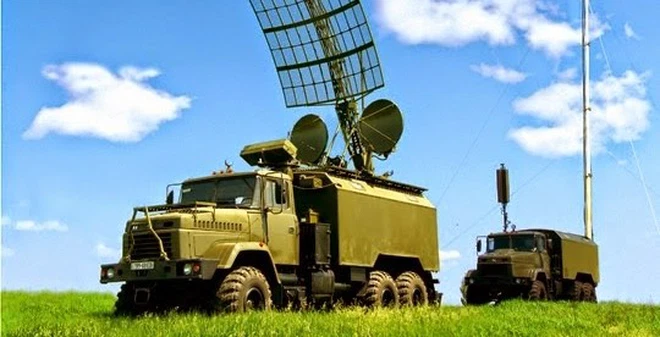
PER is a passive collection of information about the enemy’s radio-electronic activity. PER systems intercept signals, analyze their parameters, determine the coordinates of radiation sources and record frequencies. In fact, PER is a technology that consists in hearing, but not being heard. PER works in such a way that it does not emit its own radiation when collecting enemy information.
What does the RER do:
- Detects active radars, communication stations, control systems
- Determines the location of signal sources
- Analyzes the radiation characteristics of enemy systems
- Collects data for planning EW operations
Main differences between EW and RER
The main difference is in the approach to work. To put it very simply, RER and EW can be imagined as a “listener” and a “speaker”, but in real conditions everything is much more complicated.
PER works passively: it is silent, just an “ear on the air”. It fixes all active signal sources, determines frequencies, modulation types, packet structure, power level, direction to the source. It does not unmask itself, and this is its strength – the enemy does not know that he has been “led” for a long time.
Electronic warfare is the opposite. It is an active system of pressure on the airwaves. It emits interference, clogs channels, disrupts navigation, interrupts telemetry, creates false signals, and sometimes even imitates the operation of its own means to disorient the enemy.
Cooperation between EW and RER
Imagine an enemy night raid on the contact line, when drones are launched from their side – one corrective, one for resets, and several more FPVs.
1. Stage of PEP operation (passive detection):
- The RER complex is the first to “hear” the appearance of drones on the air.
- It alerts the operators, and a spectrum of signals appears on the screen: you can see the frequencies at which the FPV operates, the telemetry of the correction drone, and even the activity of their ground control.
- The system determines the direction to each source — where exactly the control station is located, at what altitude the drone is flying, and what type of transmitter it has.
- After analyzing the PER, it formulates recommendations on which frequencies can be “pressed” and which ones are better left untouched so as not to interfere with the work of its own.
At this point, the enemy doesn’t suspect anything — he thinks his drones are operating normally.
2. Stage of EW operation (active impact):
- When the FPV drones approach the positions, the electronic warfare system is activated. A powerful jammer is created at the desired frequencies, and the first FPV drone immediately loses stable communication.
- The enemy correction drone tries to change the channel, but the EPR has already tracked its “hopping”, so the EW adjusts and finishes the telemetry.
- If the enemy tries to switch to a backup range or increase the transmitter power, the EPR again detects the changes, and the EW adjusts the level and type of interference.
As a result, some drones land, some “hang” in an uncontrolled mode, and FPVs begin to circle in uncontrollable trajectories, which actually disrupts the attack and saves the lives of our soldiers.
How electronic warfare works on the modern battlefield
On the battlefield, electronic warfare and electronic warfare systems act as a single mechanism. As is already clear, first intelligence detects a threat, then suppression means neutralize it.
Drone suppression
Drones have become one of the biggest challenges of modern warfare. They are cheap, mobile, and effective. And this is both an advantage for us and, unfortunately, for the enemy. Electronic warfare counters them in several ways:
- Control channel lock – the drone loses contact with the operator and hangs or lands
- GPS interference – without navigation, the drone cannot complete the flight task
- Command substitution – individual systems can take control of the drone
Portable jammers are especially effective for FPV drones, which have become a massive threat on the front lines.
Communication and navigation jamming
Modern troops depend on radio communications and satellite navigation. Electronic warfare jams these channels, depriving the enemy of coordination. If a unit cannot contact headquarters or obtain accurate coordinates, its effectiveness drops significantly.
Typical goals:
- VHF and HF radio stations
- Satellite communication
- GPS, GLONASS, Galileo
- Data transmission systems
Protecting our own military systems
EW works not only for destruction, but also for defense, and here its role is sometimes more important than in offensive operations. Defensive EW modes are essentially a constant “background cover” that allows units to carry out their missions without the risk of becoming an easy target for radio-controlled munitions or drones.
The complexes can create so-called “protective domes” over equipment or positions. This is not a physical dome — it is a controlled zone of radio interference, where any attempt by the enemy to use a guided munition or UAV comes to naught. The system cuts off communication channels, clogs the ranges through which the saboteurs operate, or disrupts the navigation of drones to such an extent that they cannot complete the task.
Practically it looks like this:
- Against kamikaze drones: when the device approaches the cover zone, electronic warfare knocks out its GPS/GLONASS, cuts off the telemetry and control channel.
- Against guided mines and radio-explosive shells: EW blocks the frequencies on which the detonating mechanism operates, or creates such noise that the signal cannot pass through.
- When covering a column or position: mobile electronic warfare systems “drag” the dome behind them, reducing the likelihood of the FPV hitting previously scouted vehicles. Even if the FPV operator sees the vehicle in the optics, as soon as it enters the suppression zone, the signal starts to fall, and the accuracy of the hit is lost.
- Protection of headquarters, warehouses, and RER positions: here the dome works as a filter — anything approaching with suspicious frequency characteristics is immediately blocked.
This is not a perfect shield — there are blind spots, there are nuances of operation depending on the terrain, there is the enemy’s adaptation to other frequencies. But without these “protective domes” our losses would be many times greater.
Therefore, electronic warfare in defensive mode is an active survival system for units that literally creates safe corridors in places where soldiers risk their lives every moment.
Electronic warfare and electronic warfare technologies and systems in Ukraine
Ukrainian forces use a wide range of systems, from portable jammers to strategic complexes. Some of the equipment is inherited from Soviet times, some is obtained from partners, and most of the systems are developed by Ukraine itself. They are cheaper and take into account real needs on the battlefield.
Tactical and mobile systems
These tools work at the level of individual units and positions:
- “Bukovel-AD” is an automotive complex for protection against drones, operating in automatic mode
- Portable jammers – worn by individual fighters, block FPV drones and control systems at distances of up to several kilometers
- “Enclave” — a mobile station for detecting and direction finding radio station signals
Operational-tactical and strategic systems
More powerful complexes protect entire areas or critical infrastructure:
- “Nota” is a jamming station capable of blocking communications and navigation for tens of kilometers
- “Polen” is a multi-channel system for protecting objects from drone strikes
- Imported complexes — including systems from Western partners
PEP systems
Electronic reconnaissance requires accuracy and sensitivity. Ukrainian units use:
- Direction finders — determine the direction to the signal source
- Spectrum analyzers — recognize the type and characteristics of radio electronic emissions
- Automated complexes — collect data, analyze it in real time, and transmit it to decision-making centers
In particular, drongrif.com presents drones designed to counter electronic warfare, which help the army obtain critical data on enemy activity:
The role of electronic warfare and electronic warfare in warfare and modern operations
No operation is possible today without electronic warfare. Electronic warfare and electronic warfare systems solve several strategic tasks:
- Troop protection – complexes cover columns of equipment, positions, and concentration areas
- Fire damage – PER data is transmitted to artillery for precise strikes on command posts and radars
- Disorganization of the enemy – jamming communications hinders coordination and reduces the effectiveness of attacks
In some episodes of the war, the successful use of electronic warfare saved entire units from attacks by enemy drones or artillery that could not obtain target coordinates.
Advantages and challenges of using EW and RER
Technologies are not omnipotent. They have both strengths and limitations.
Advantages:
- Contactless threat neutralization
- Possibility of protecting large areas with one complex
- Intelligence gathering without risk to people
Challenges:
- The enemy adapts — changes frequencies, uses coding, applies optical control channels
- Powerful electronic warfare stations can interfere with one’s own troops
- High degree of technical complexity requires trained personnel
- Limited battery life for portable devices
Private production and innovation in Ukraine
Unfortunately, the state does not have time to provide everything necessary (mostly because the need is huge), so private companies and volunteers are actively filling the gaps. Dozens of startups are developing jammers, drone detectors, and radio signal analysis systems.
It is Ukrainian teams that ensure rapid adaptation to new threats. They can quickly change designs, test solutions in the field, and produce products in small batches — where large enterprises cannot keep up.
Innovations include:
- Compact detectors for detecting FPV drones
- Automatic signal classification systems
- Integration of PER with reconnaissance drones for target triangulation
Prospects for the development of electronic warfare and electronic warfare in Ukraine
Electronic warfare will only intensify. Experts predict several directions of development:
- Artificial intelligence — automatic threat recognition, signal classification, selection of countermeasure method without operator participation
- Network-centricity — combining all electronic warfare and electronic warfare systems into a single network for coordinated actions
- Mini and micro systems — jammers the size of a smartphone, built into a fighter’s equipment
- Counter-EW — systems to protect one’s own radio frequencies from enemy suppression
It is worth highlighting the development of drone detection tools that operate at low power or use optical channels – these threats require new approaches.
Military electronic warfare (EW) and electronic warfare (EW) systems are a critical component of modern defense. They save lives, provide battlefield advantages, and change the very nature of warfare. And as the conflict continues, these technologies will continue to advance even faster.

Ready-to-fly aviation complex with remote control, tablet, mast-mounted repeater, FPV goggles, and 500 drones in the set
Warning: Undefined array key 1 in /home/hryf/drongrif.com/www/wp-content/themes/Proacto-Theme/template-parts/blocks/pr-products-sidebar.php on line 40
0
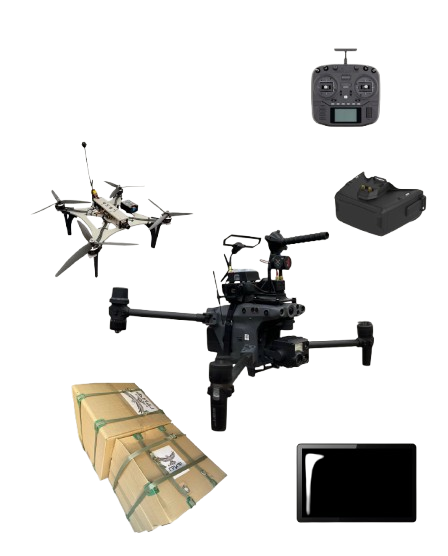
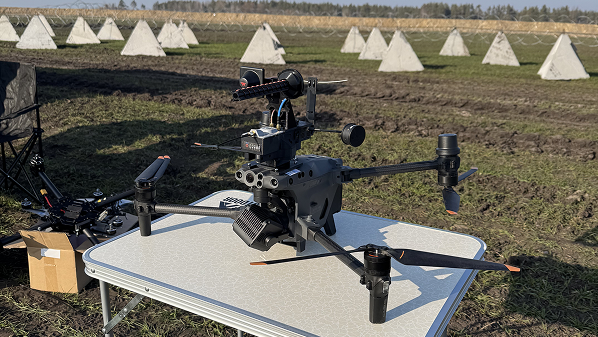
A complex with a Mavic charging station, a repeater and full support for combat missions.
Warning: Undefined array key 1 in /home/hryf/drongrif.com/www/wp-content/themes/Proacto-Theme/template-parts/blocks/pr-products-sidebar.php on line 40
0

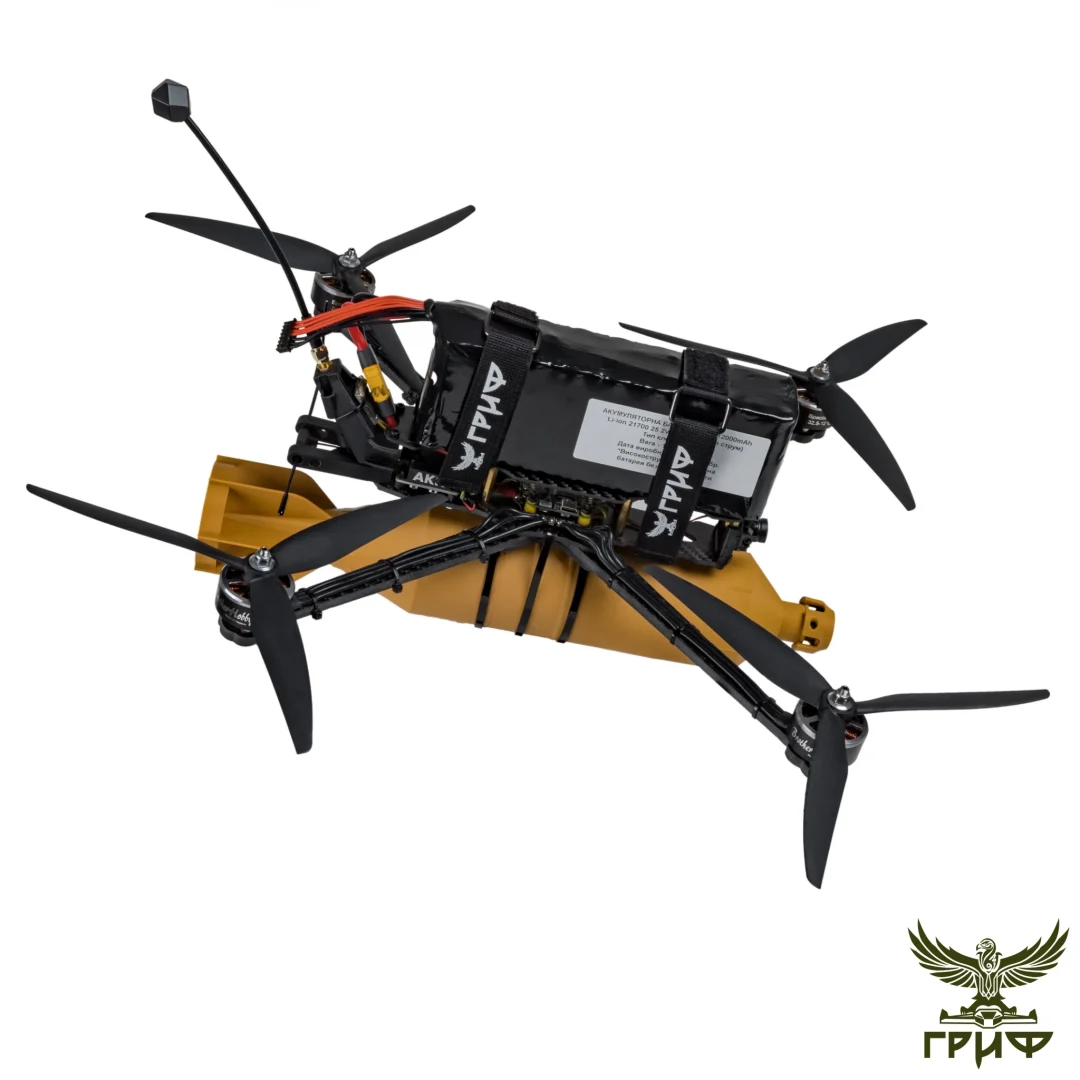
FPV drone 10 for strike missions. Operating range up to 20+ km, combat load up to 3 kg. Ideal for mass use.
Warning: Undefined array key 1 in /home/hryf/drongrif.com/www/wp-content/themes/Proacto-Theme/template-parts/blocks/pr-products-sidebar.php on line 40
0
Frequently asked questions
-
How is EW different from RER?
PERS is passive intelligence, it collects data on enemy radio signals. What is PERS? It is a system for intercepting and analyzing radiation without active interference. EW is active countermeasures that suppress or deceive enemy systems. Often they work together: PERS detects the target, EW neutralizes it.
-
What types of drones can be suppressed by EW?
Almost all drones are radio-controlled, from DJI Mavic to FPV kamikaze. The exception is autonomous systems with a preset route or drones with an optical control channel (via cable). For them, electronic warfare is ineffective, other methods are required – physical destruction or interception.
-
Can I use EW without PER?
It is possible, but the effectiveness drops sharply. Jamming the entire radio spectrum is “shooting in the square.” Without accurate data on the frequencies, power, and location of enemy systems, electronic warfare operates at random. EER provides accurate information that allows the use of targeted interference and saves equipment resources.