

BPA: definition, types, principles of operation and application
Article content
- Definition and composition of BPA, decoding of the term
- Principles of operation of an unmanned aircraft complex
- The use of UAVs in combat operations
- Factors influencing the effectiveness of BACs
- Current trends in the development of BPA
Unmanned systems have radically changed the approach to surveillance, reconnaissance and the execution of complex tactical tasks. Today, various platforms are widely used on the front line and in the rear: from small tactical drones to operational-tactical UAVs. In this article, we will consider what an unmanned aviation complex is, what components are included in it, how they work and where they find practical application – from ISR tasks to fire correction and strike delivery.
Definition and composition of BPA, decoding of the term
An UAV is an unmanned aerial vehicle complex, a complex system that combines several subsystems to perform air missions. The main difference between different complexes is the unmanned aerial vehicles in its composition.
Main components of an unmanned aircraft complex
An unmanned aerial vehicle system can have different configurations depending on its class and technical capabilities. Key elements usually include:
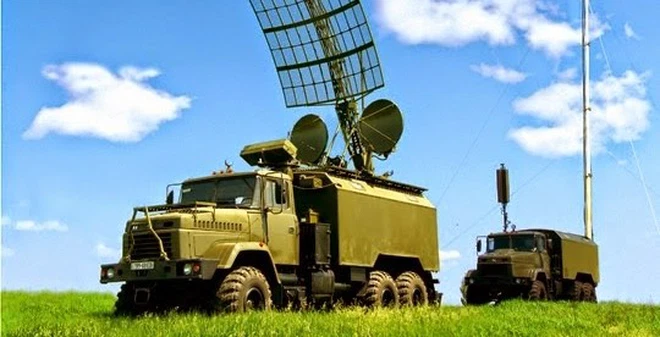
- Communications and surveillance equipment – radio communication for interaction with control centers, data transmission channels between the operator and the control center, automatic dependent surveillance (ADS-B) systems, as well as auxiliary surveillance radars.
- Navigational instruments that provide orientation of the aircraft in flight.
- Technological modules for taking off and landing according to the selected method (catapult launch, helicopter mode, vertical takeoff, etc.).
- On-board computer systems and autopilots that implement flight control and automation of flight scenarios.
- Means of monitoring the technical condition of the platform during operation for timely detection of malfunctions.
- Emergency mission termination systems that allow the aircraft to be safely ejected from flight in the event of critical situations.
- Mechanisms for automatic return to base in the event of loss of communication or control.
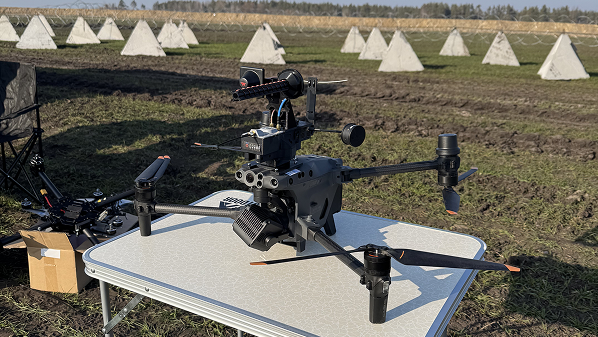
- Specialized equipment for performing tasks of a specific profile, for example, reconnaissance sensors, target designation systems, electronic countermeasures or suspensions for influencing targets, as well as devices for monitoring terrain and objects.
Each of these blocks can be modified or modularly supplemented depending on the purpose of the platform – from civilian surveillance to more complex special or defense applications.

Source: Freepik
Classification of BPA by size and purpose
They are distinguished by mass, flight range and purpose:
- Micro and mini drones – local surveillance.
- Tactical drones – short combat and reconnaissance missions.
- Operational-tactical unmanned aviation complex – longer operations at the operational front.
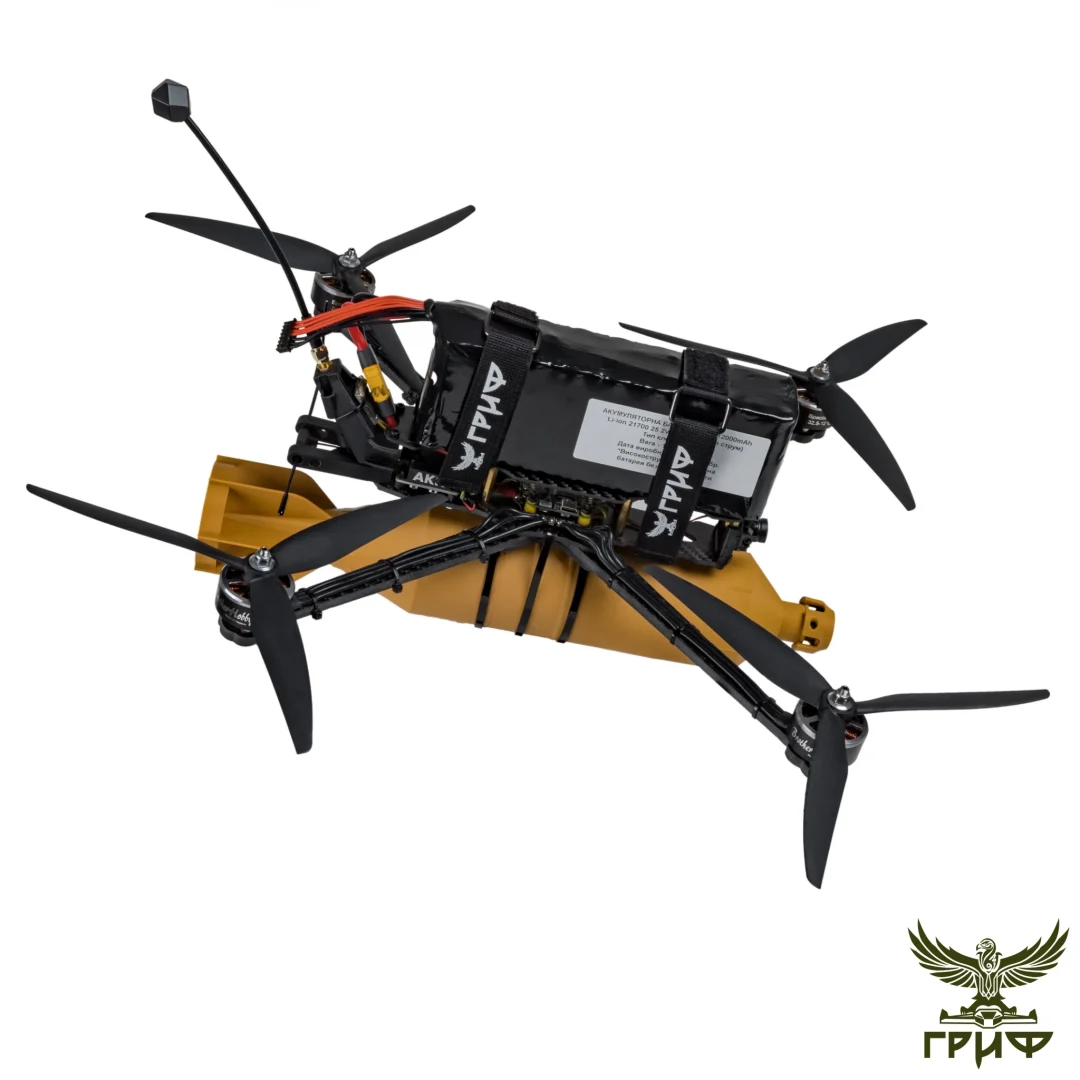
- Strike platforms – delivery of effective non-lethal or lethal weapons. An unmanned aerial vehicle complex can have a different number of strike drones depending on the type of system – from several dozen to a hundred units. The composition includes various combat drones:
- multi-purpose percussion devices;
- “kamikaze” models.
Strike UAVs are designed to engage manpower, armored vehicles, and other targets, and together with reconnaissance platforms, they constitute an important element of modern defense concepts, providing units with additional capabilities on the battlefield.
- Reconnaissance UAVs for ISR missions – information gathering and surveillance. They are equipped with energy-intensive engines and batteries for long flights, as well as high-quality optics that allow for real-time images and data acquisition. Such platforms are often used to support assault operations and refine artillery adjustments.
- Specialized platforms for logistics or rescue operations.
The systematization of UAVs by size and functionality demonstrates their scalable role in modern warfare. From micro- and mini-drones that provide local “vision” to operational-tactical complexes for deep reconnaissance and strike platforms carrying ammunition (in particular, “kamikazes”), each class performs its own, clearly defined task.
Reconnaissance UAVs are the “eyes” of units, critical for fire control and real-time data collection, while strike UAVs provide fire superiority. This diversity, complemented by specialized aircraft for logistics, emphasizes that this is not just a complex with aircraft, but a key, multifunctional element of modern defensive and offensive operations.
Principles of operation of an unmanned aircraft complex
The work of the UAV is based on the correct interaction of the platform, control system and data processing tools. The key stages are mission planning, its execution and analysis of the received information.
The unmanned aerial vehicle complex is used according to certain rules:
- compliance of tasks with the overall goal of the operation;
- concentration of resources in key areas;
- reasonable allocation of funds.
It is important to maintain the unit in constant readiness to operate in any conditions – regardless of the weather and time of day – and to ensure the prompt collection, processing, and transmission of intelligence information received.
Efficiency is achieved by maximizing the capabilities of the aircraft and its payload, as well as by increasing the survivability of the unit: this involves high-quality personnel training and thoughtful route planning to reduce risks. No less important is close coordination with other formations – from planning to task execution. Cooperation with air defense, electronic warfare and manned aviation units must be clearly coordinated in time, place and objectives.
These approaches are formalized in the form of procedures and algorithms that are used in the preparation and execution of missions within the responsibility of specific units.
Control and communication systems
The heart of the control system is the control system and the ground station. Telemetry, command signals and video streams are transmitted via communication. Modern control systems provide:
- route planning;
- platform status monitoring;
- changing tasks during the flight;
- real-time data transmission.
A reliable communication channel is the key to a safe flight and an effective mission.
Unmanned aerial vehicles (except for fully autonomous models) are controlled from remote piloting stations (RPS) via a command and control channel. During the flight, control can be carried out from one or more RPS, but not simultaneously from several points. The RPS can be a compact portable device or a deployed (single or multi-remote) station. It can be located both indoors and outdoors, can be stationary or installed on a vehicle, ship or aircraft, as well as portable. Access to the RPS by unauthorized persons is prohibited.
The command and control channel can operate in simplex or duplex mode and is used both in the direct line of sight (LOS) and beyond line of sight (BLOS).
LOS means that the transmitter and receiver are within radio visibility and communicate directly or via a terrestrial network, provided that the remote transmitter is in line of sight with the device.
BLOS refers to any configuration where the transmitter and receiver are not in line of sight; this category includes various systems (ground-based, airborne, satellite-based) in which one or more RPAS interact with each other.
Technical load of the BPA
When planning combat or special missions, the technical characteristics of the selected payload play a crucial role – the accuracy of the mission and the usefulness of the results obtained depend on them.
Today, a wide range of equipment is used for different types of UAVs:
- visible range optical systems;
- infrared cameras;
- Synthetic Aperture Radar (SAR);
- sensors capable of detecting and tracking moving objects.
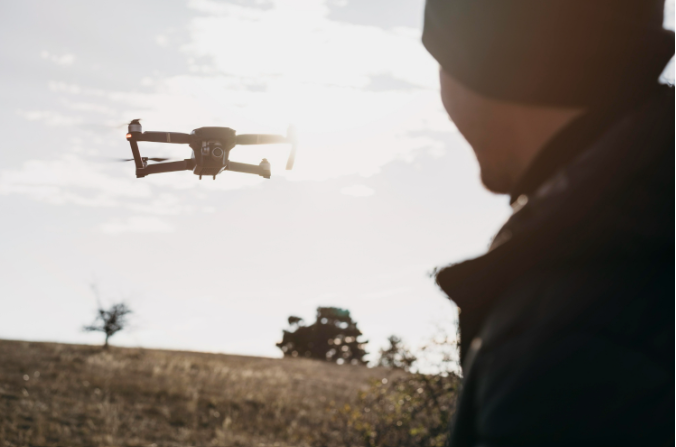
The level of sensitivity and quality of reconnaissance equipment determine the value of information. The operator (external pilot) must select the load that most adequately meets the conditions of a specific operation and aerial reconnaissance tasks: ISR tasks require some sensors, fire correction – others. Flexibility of configuration is an important feature of modern UAVs.
The use of UAVs in combat operations
UAVs have changed the nature of conducting reconnaissance, conducting reconnaissance and strike operations, and supporting ground units.
Depending on the tasks, drones can take off simultaneously or one after the other:
- Intelligence. Unmanned aerial vehicles are used to collect information about the terrain, enemy location, equipment and movement of forces. The simultaneous mass launch of several devices allows you to quickly cover a large area – operators receive a view from different sides and heights, which forms a more complete situational picture. The sequential withdrawal of UAVs is used during long missions: when one platform sits down for recharging or maintenance, another one replaces it, which ensures continuous monitoring of the territory.
- Shock operations. Drones are used for pinpoint strikes on specific targets. The synchronous launch of several copters allows you to attack several objects at the same time or coordinate actions to increase efficiency – some devices can distract attention, while others perform the main task. Sequential launches are useful where you need to carry out a series of strikes or maintain long-term offensive activity: the devices perform tasks in turn, ensuring continuous impact on the enemy and gradual depletion of his resources.
Such a flexible approach allows for the most efficient use of limited aircraft resources, turning UAVs into an indispensable tool for supporting ground forces and implementing both short-term point-based and long-term grueling operations.
ISR tasks and reconnaissance
ISR tasks are one of the main areas of use of UAVs. This is a set of actions aimed at reconnaissance, surveillance and collection of information for decision-making in military or special activities. The abbreviation ISR stands for:
- I – Intelligence – collection and analysis of data about the enemy, objects, equipment or terrain;
- S – Surveillance – constant monitoring of a designated area or targets using cameras, sensors, or other equipment;
- R – Reconnaissance – direct detection of targets or objects in the desired area.
Reconnaissance UAVs provide visual and other information collection, allowing for an operational picture without risk to people. Such platforms help identify targets, assess the situation, and plan actions.
Searching for targets along a pre-laid route is used when there is initial information about the probable location of objects or the direction of their movement, as well as in the presence of locality, which facilitates unambiguous fixation of positions.
This approach allows for maximum use of the tactical and technical capabilities of the platform and its sensors. It is especially necessary in the following situations:
- control of the front line, flanks and rear;
- detection of threats on the roads;
- assessment of the condition of road infrastructure.
Additional tasks in this mode include checking road conditions, selecting locations for landing vehicles, and identifying potentially dangerous areas or suspicious objects.
Adjustment of artillery with UAVs
The unmanned aviation complex plays an important role in supporting missile and artillery units, performing a number of critical tasks:
- clarifying targets and adjusting fire;
- detection of advanced lines and minefields;
- determining the location of enemy firing positions, engineering structures and fortifications;
- collecting coordinates during combat contact;
- assessment of the consequences of fire exposure.
In addition, military drones can be used to illuminate targets and provide additional information support to units on the ground.
The effectiveness of such use largely depends on the coordination of actions between the crew of the unmanned complex and the artillery unit. Mutual understanding is possible only if the drone operators know the intricacies of artillery work, and the artillerymen know the capabilities and limitations of the platform. The best results are obtained through joint training and exercises, where interaction is practiced during maneuvers and firing.
The artillery battery commander must take into account that UAVs provide visual control of the situation, but cannot always appear over the desired area instantly. Therefore, when planning fire, it is important to pre-agree the time the device will be in the area of interest so that at the moment of the start of the shelling, the reconnaissance means are already working and providing useful information.
The remote piloting station can be located next to the battery command post or operate autonomously. If there is established communication, the senior officer directly controls the adjustment process. However, even in coordinated operations, problems are possible:
- a device held over the target area risks running out of battery power before firing begins;
- The presence of a UAV can detect preparations for a strike in advance, reducing the effectiveness of the fire.
When working with adjustments, it is important to accurately record the results of shots and correctly transfer information between the operator and the artillery. Operators must be well aware of:
- the terrain around the target;
- expected changes in the situation due to the lesion;
- possible enemy maneuvers.
Preliminary discussions of scenarios and algorithms of actions in joint planning between the artillery and the drone unit become extremely useful.
For further analysis and evaluation of the actions taken, it is recommended to record the received video and save the flight materials, which will allow you to analyze the operation together with the command and identify points for improving interaction and tactics.
Strike capabilities of unmanned aerial systems
A strike drone is capable of carrying out strikes according to certain rules. For example, neutralizing enemy air defense systems by hitting key elements: command posts or radar stations in order to disrupt their operation or disable them.
Strike drones are also used in maritime operations: to control the coast, limit the maneuverability of surface vessels, support their own naval forces, and increase the security of port facilities.
In combat applications, the strike capabilities of UAVs are used in conjunction with intelligence data to increase effectiveness and minimize risks to civilians.

Source: Freepik
Factors influencing the effectiveness of BACs
The effectiveness of BAC depends on many external and internal factors.
Terrain and Weather
Terrain and weather conditions significantly affect mission planning and communication stability. Mountains, forested areas, or dense urban development create additional obstacles to signals and visibility. Therefore, mission planning takes these limitations into account.
Weather conditions, including precipitation, wind speed, and air temperature, can significantly affect the performance of a UAV and the stability of its systems. Particular attention should be paid to the risk of icing, which occurs during flights in sub-zero temperatures and the presence of moisture in the air – in such situations, the climb height may need to be adjusted to avoid loss of controllability.
Fog, low cloud cover, and optical obstructions significantly reduce the effectiveness of target equipment, making navigation and landing accuracy difficult. Even infrared surveillance systems, which are capable of working to some extent through light haze, lose their effectiveness in thick fog or clouds. Therefore, in such weather conditions, flights are often conducted at minimum altitudes to ensure high-quality intelligence collection.
For operational control of weather parameters, portable or mobile weather stations are used, which allow for accurate determination of the state of the atmosphere directly in the launch zone. The governing bodies of the central executive power, units of the Armed Forces of Ukraine and other formations operating unmanned aerial systems establish a list of critical weather conditions under which flights of certain types or classes of UAVs are prohibited or restricted. These parameters are determined in accordance with the technical capabilities specified in the classification and flight operational documents of UAVs.
Permission to fly in specific weather conditions is issued by the commander of the unit in which the drone unit is located. During the task, the operator (external pilot) makes the final decision to continue or stop the mission, based on current and forecasted weather changes.
Optimal conditions for the effective use of unmanned aerial systems are provided by open territory, for example, steppe or desert areas.
Flight safety and emergencies
Flight safety is a critical aspect of UAV operation. Procedures to prevent accidents, collision detection and avoidance systems, and well-established protocols for dealing with loss of communication or technical failures are essential. All of this will conserve resources and reduce risks to people.
Responding to emergency situations during a drone flight is complicated by the dependence on the speed and reliability of command transmission via communication channels or the Internet.
One of the additional limitations during the performance of tasks is that the operator, who receives and processes intelligence data, is not always able to simultaneously control the flight of the drone in an emergency situation. Among the main risks is the possibility of losing the data transmission channel, which significantly complicates control of the device compared to manned systems. Therefore, when planning missions, special attention should be paid to measures to prevent loss of communication, maintain the accuracy of navigation data and ensure the possibility of emergency restoration of control, taking into account the available communication channels.
It is important to create conditions for the prompt establishment of communication between strike complexes by transferring control to another ground station located in the line of sight (LOS). Such backup points must be technically compatible with a specific UAV model and guarantee a safe controlled return or emergency landing.
Current trends in the development of BPA
The UAV industry is developing rapidly, opening up new opportunities for military applications.
Innovations in unmanned aircraft systems
Recent advances include:
- increasing the level of flight automation;
- improving sensors;
- implementation of artificial intelligence algorithms for information analysis and route optimization.
At the same time, energy-efficient solutions and modular systems are being actively developed, which allow for quick changes in equipment configuration depending on the tasks.
Prospects for the integration of UAVs into the Armed Forces of Ukraine
The integration of UAVs into the military structure involves:
- expanding network capabilities;
- increasing compatibility with existing management systems;
- strengthening operator training.
In Ukraine, the priority is the development of tactical and operational-tactical platforms that increase the level of situational awareness and the effectiveness of combat operations.

Ready-to-fly aviation complex with remote control, tablet, mast-mounted repeater, FPV goggles, and 500 drones in the set
Warning: Undefined array key 1 in /home/hryf/drongrif.com/www/wp-content/themes/Proacto-Theme/template-parts/blocks/pr-products-sidebar.php on line 40
0
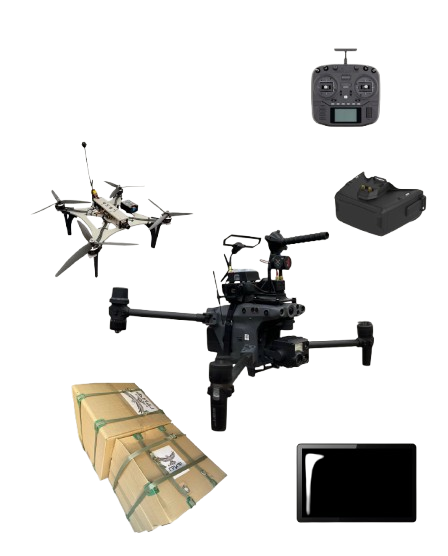
A complex with a Mavic charging station, a repeater and full support for combat missions.
Warning: Undefined array key 1 in /home/hryf/drongrif.com/www/wp-content/themes/Proacto-Theme/template-parts/blocks/pr-products-sidebar.php on line 40
0

FPV drone 10 for strike missions. Operating range up to 20+ km, combat load up to 3 kg. Ideal for mass use.
Warning: Undefined array key 1 in /home/hryf/drongrif.com/www/wp-content/themes/Proacto-Theme/template-parts/blocks/pr-products-sidebar.php on line 40
0
Frequently asked questions
-
What is BPA and what are its main components?
UAV stands for: an integrated complex that includes an aerial platform (UAV), a ground station, a control system, communication channels, and a payload.. Basic The components provide the ability to perform missions and process the received data.
-
What types of unmanned aerial vehicles are there?
There are mini-, tactical, operational-tactical and strike platforms. They also distinguish reconnaissance UAV and specialized drones for logistics and monitoring.
-
How is UAV used to adjust artillery fire?
Fire adjustment occurs by transmitting intelligence information about the accuracy of hits and the position of targets. Data from UAVs are used to clarify positions and make command decisions.
-
What factors influence the efficiency of the BAC?
Performance is affected by weather conditions, terrain, the presence of communication obstacles, the level of operator training, and the technical condition of the platform and control system.
-
What are the prospects for the development of unmanned aircraft systems in Ukraine?
Prospects include expanding the production of tactical drones, introducing innovative sensors, strengthening operator training systems, and integrating UAVs. into the overall defense infrastructure. The role of international cooperation and exchange of experience is also growing.