

Electronic warfare (EW): essence and principles of operation
Article content
- REB: what is it in simple words
- Main tasks of electronic warfare
- How electronic warfare works
- Main types of electronic warfare equipment
- Where is electronic warfare used?
- What affects the efficiency of electronic warfare?
- Advantages and limitations of electronic warfare
- How to choose an electronic warfare agent
- Electronic warfare and modern drones: who is who?
Modern warfare is not only fought in the trenches. Much of the fighting takes place in the radio spectrum, where communications, GPS, and equipment control channels operate. This is where electronic warfare comes into play—a tool that can land an enemy drone, disrupt attack coordination, or shield your units from reconnaissance. In short, it’s a struggle for control of the radio spectrum in real combat conditions.
REB: what is it in simple words
What is EW? EW is actions aimed at suppressing, distorting, or substituting enemy signals. At the same time, these same systems protect their own communication channels and navigation from similar influences.
For Ukraine, this has long been not just a piece of equipment, but a critically important element of defense: since the first days of a full-scale war, electronic warfare equipment has been covering positions from drones and radio reconnaissance every day. They allow:
- Interrupt enemy communication channels
- Knock guided munitions off course
- Protect your own equipment from targeting
- Disorient reconnaissance drones
Main tasks of electronic warfare
Electronic warfare performs specific tasks on the battlefield aimed at reducing the effectiveness of the enemy and protecting its own units. Among the main goals:
- Neutralization of enemy signals. Jamming communication channels, GPS, and drone control to reduce enemy operational coordination.
- Creating obstacles and distractions. Emitting radio or electronic interference to disorient enemy equipment and intelligence.
- Protection of own units. Ensuring safe evacuation, covering the movement of equipment, protecting command posts from reconnaissance and drone attacks.
- Space control. Distracting enemy drones and creating “dead zones” for their movement to ensure an advantage on the battlefield.
How electronic warfare works
Modern electronic warfare systems do not simply “jam the signal”, the work of electronic warfare is a complex of intelligence, analysis and adaptive suppression. Let’s go through a small diagram of “how electronic warfare works”.
1. Target identification and classification
Electronic warfare begins its work even before any jamming:
- Broadband antennas scan the radio airwaves in real time;
- the system detects active transmitters: drones, walkie-talkies, GPS trackers, Starlink modems, local Wi-Fi points;
- The parameters are determined: frequency, modulation, bandwidth, power level.
An example of how this can be seen in action:
The system detects signal jumps on the drone control channel frequencies. The system can immediately identify that this is an FPV operator working from a distance of up to 3 km.
2. Signal analysis and strategy selection
After fixing the target, the electronic warfare system evaluates the type of signal and selects a method of influence:
- some algorithms work for drones (FHSS, LoRa, Wi-Fi 5/6);
- others are suitable for GPS/GLONASS (point suppression of the navigation channel);
- For military radios, separate modes are used that take into account frequency hopping.
Practical scenario:
The system recognizes that the drone is using frequency hopping. Instead of simply squelching, it chooses to “follow” frequencies to cover the entire range.
3. Interference generation
After determining the exposure mode, the jamming transmitters are turned on:
- broadband noise for coarse jamming;
- narrowband jammers for point suppression of a specific channel;
- simulated interference that creates fake packets or GPS coordinates;
- Spoofing, when the system substitutes the signal and causes the equipment to work incorrectly.
An example from the work of electronic warfare:
FPV is attacked by a combination of interference: noise on the control channel and a separate point interference on the video signal. As a result, the operator sees “snow” and loses control.
4. Monitoring the effect and adaptation
Electronic warfare does not work in one shot — it constantly adjusts its impact:
- analyzes whether the enemy signal level is dropping;
- monitors whether the protocol or frequency has changed;
- automatically adjusts to the new range;
- changes the type of interference if the first option did not work.
Тепер ви точно не будете гуглити «система РЕБ що це?» оскільки вже маєте чітке уявлення, як вона працює і навіщо потрібна.
Main types of electronic warfare equipment
Combat equipment varies in mobility, power, and purpose. Let’s consider the main categories.
Trench mobile systems
These are compact devices that an infantryman can carry with him. Typically, these are “backpack” stations weighing 3-8 kg with a range of up to 1-2 km. Their task is to protect the unit from FPV drones and small reconnaissance quadcopters.
A typical example is the Bukovel-AD series of systems. They create a dome of protection around a position in which drones lose control. They operate on batteries, quickly deploy and collapse. The disadvantage is limited power and radius.
Automotive complexes
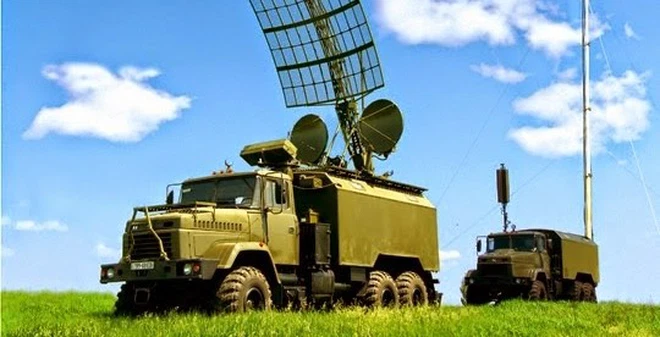
These are more serious systems based on SUVs or armored vehicles. They have higher power, a range of up to 5-10 km, and can operate for several hours without recharging.
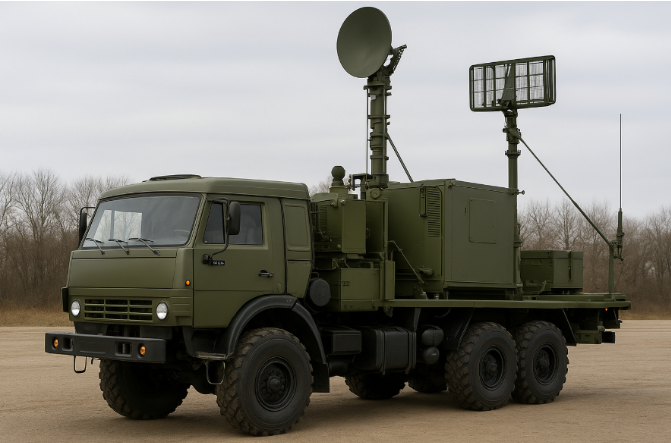
Such complexes accompany columns of equipment, cover command posts, provide protection during landings. They combine PEP and REP, can simultaneously track several targets and jam various types of signals.
Stationary platforms
These are large electronic warfare complexes that are installed at important facilities: power stations, military bases, command posts. They operate around the clock and cover a radius of tens of kilometers.
Such systems are usually integrated with air defense: they not only jam signals, but also transmit information about detected targets to units that can physically destroy them.
Counter-drone systems
A separate category that has become critically important. These tools specialize in UAVs — from small quadcopters to large attack drones.
Modern anti-drone systems can:
- Detect drones at a distance of up to 5-10 km
- Recognize the type of UAV (reconnaissance, FPV, kamikaze)
- Suppress multiple targets simultaneously
- Work in automatic mode
Operational-strategic complexes of the Armed Forces of Ukraine
These are the most powerful electronic warfare systems, capable of affecting the radio-electronic environment of an entire region. The operating range is hundreds of kilometers.
Such complexes can simultaneously cover large frequency ranges, disrupt communications between enemy groups, complicate coordination of offensive actions, and create “dead zones” for enemy intelligence.
Where is electronic warfare used?
The use of electronic warfare today is not only at the front. The technologies work in many areas:
- Line of contact. Here, electronic warfare is used every second: protection against FPV drones, suppression of intelligence, blocking of command channels. Each trench can have its own portable system.
- Frontline cities. Protection of civilian infrastructure, energy facilities, military depots from attack drones. Stationary systems operate around the clock.
- Rear facilities. Military bases, airfields, control points — they are all equipped with multi-layered electronic warfare protection.
- Mobile units. Columns of equipment, airborne operations, maneuver groups — they all require constant electronic cover.
- Naval and air operations. Ships and aircraft have their own electronic warfare systems to protect against guided missiles and anti-ship missiles.
What affects the efficiency of electronic warfare?
Even the best electronic warfare (EW) tools do not always give 100% results. This is influenced by many factors:
- Transmitter power. The higher the power, the further the system operates and the more difficult it is to overcome. But more power = larger dimensions, weight and energy consumption.
- Terrain. Radio waves propagate more poorly in mountains, forests, and between buildings. Electronic warfare works most effectively in open areas.
- Frequency range. Modern drones can operate on dozens of different frequencies. The system must cover all relevant ranges, otherwise the enemy will simply switch to another channel.
- System intelligence. Automatic threat recognition, rapid switching between targets, and adaptation to enemy tactics — all of this increases efficiency.
- Weather conditions. Rain, fog, and atmospheric interference can affect the propagation of radio waves.
- Tactics of the enemy. If the enemy uses autonomous drones (which do not require constant communication) or reserves several control channels, it is more difficult to suppress them.
Advantages and limitations of electronic warfare
EW can indeed make a big difference in the course of combat, but it is not a magic solution for all cases. In some conditions it works perfectly, but in others it has natural limitations: range, terrain features, enemy power, types of signals. It is a powerful tool, but not a “switch off the enemy”.
Advantages
- Invisibility of influence. Electronic warfare does not create explosions or leave traces. The enemy may not even immediately understand why his equipment is not working.
- Багаторазовість. Unlike missiles or shells, an EW system can be used over and over again without expending ammunition.
- Reaction speed. Electronic systems are triggered in fractions of a second—faster than any physical weapon.
- Mass impact. One complex can simultaneously affect dozens of targets throughout the entire radius of action.
- Economy. It is not profitable to shoot down a $500 drone with a $50,000 missile. Electronic warfare allows you to do it for pennies on the electricity bill.
Without electronic warfare, it is impossible to imagine effective defense or offense. And as practice in recent years shows, it is in the invisible spectrum of radio waves that the fate of real battles is often decided, and the lives of our soldiers depend on electronic warfare.
Limitation
- Limited radius. Even powerful systems rarely operate beyond 50 km. For strategic purposes, this may not be enough.
- Vulnerability to autonomous systems. If a drone or missile operates according to a predetermined program without external control, electronic warfare is powerless.
- Energy dependence. Powerful transmitters consume a lot of energy. Portable systems run out of power quickly.
- Possible errors. The system can jam its own signals or civilian equipment if configured incorrectly.
- Technical duel. The enemy is constantly improving its EW circumvention technologies. This is an arms race that cannot be stopped.
So EW is a powerful but not omnipotent tool. It is capable of neutralizing expensive threats with cheap means, but it requires energy, fine-tuning, and constant technical development to remain effective in the changing conditions of war.
How to choose an electronic warfare agent
If you are looking for a system for specific needs, you should consider:
- Purpose of use. Protecting a trench, a column of equipment, or a strategic facility — there is a different type of equipment for each task.
- Mobility. Portable system, car complex or stationary installation.
- Frequency range. Make sure the system blocks all current threats: 2.4 GHz, 5.8 GHz, GSM, GPS.
- Range of action. Manufacturers usually indicate the maximum range, but in real conditions it may be less.
- Work autonomy. How many hours can the system run on batteries or a generator?
- Reliability and support. It is important to have the ability to quickly repair and provide technical support from the manufacturer.
Electronic warfare and modern drones: who is who?
The hottest area of EW use right now is the fight against drones. But not all UAVs are equally vulnerable to electronic interference.
Why FPV drones are most vulnerable to electronic warfare
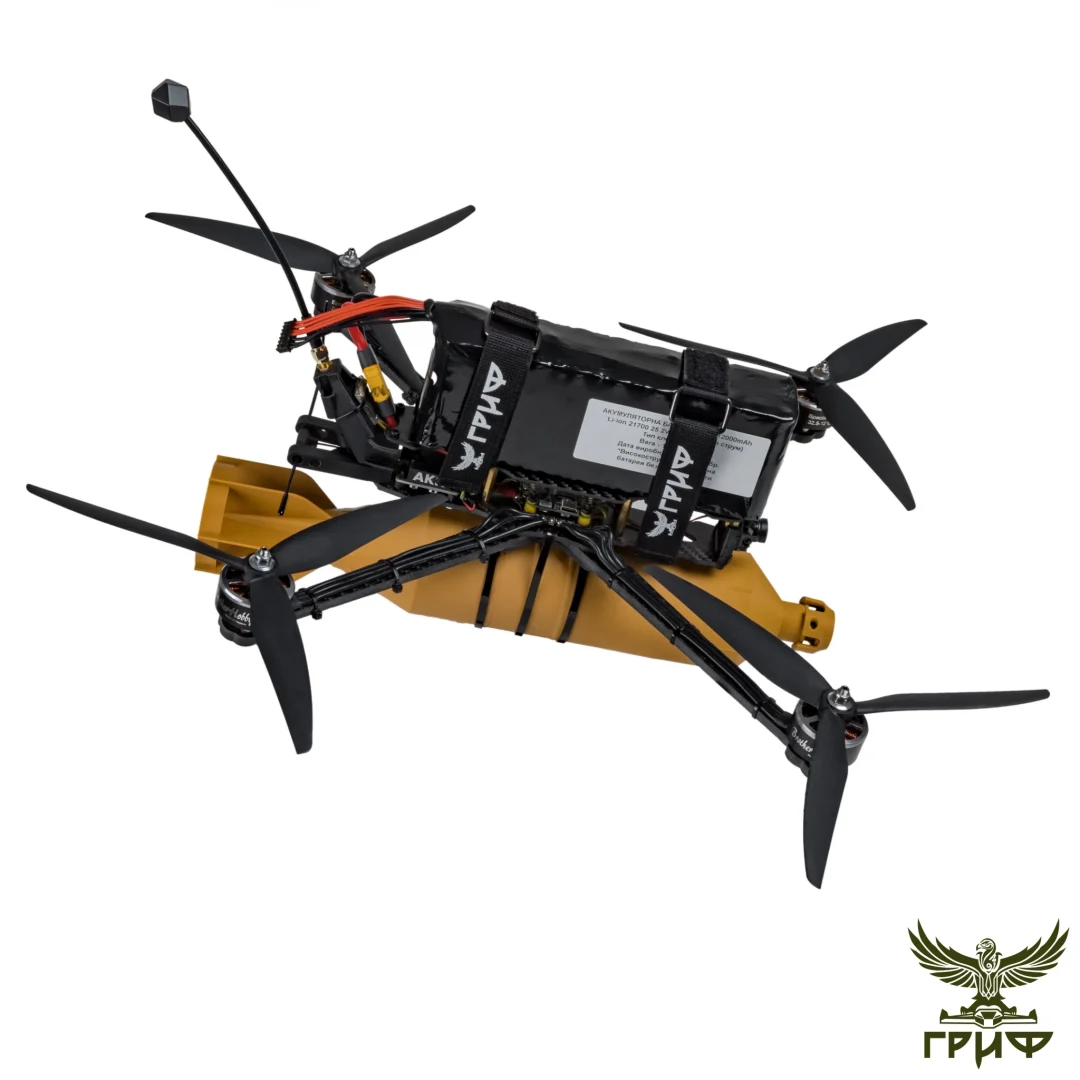
FPV (First Person View) drones are kamikaze quadcopters that are controlled by the operator from a “first-person” perspective via video transmission. They require constant radio communication during all phases of flight:
- Control channel (usually 2.4 GHz)
- Video signal (5.8 GHz or other frequencies)
- Often also GPS for navigation
EW operates on FPV as follows:
- The control channel is jammed – the operator loses the ability to maneuver
- Video disappears — pilot goes “blind” and can’t see target
- GPS is interrupted – the drone cannot return to base automatically
The result: the drone either falls on the spot, or starts moving erratically, or the auto-return program (if it has one) is triggered and it flies back to the operator. That is why FPV attacks are the most effective way to repel electronic warfare.
Why “Shahed” is harder to suppress
Shahed (Geran-2) kamikaze drones are much more resistant to electronic warfare for several reasons:
- Autonomous navigation. They fly along a pre-set route through an inertial system that does not require external signals.
- Backup systems. If GPS is jammed, inertial navigation is turned on. If one frequency does not work, there are backup channels.
- Flight altitude. Shaheds often fly at altitudes of 1000+ meters, where ground-based electronic warfare systems operate less effectively.
- Simple electronics. Primitive stuffing means fewer vulnerable elements. The Shahed can fly even without constant course correction.
That is why “Shaheeds” are more often shot down physically – with anti-aircraft missiles, machine guns, even small arms.
Which drones are least vulnerable to electronic warfare?
To summarize, the following types are most resistant to electronic warfare:
- Autonomous UAVs. Those that fly completely without external control, according to a pre-set program.
- Drones with AI guidance. Machine vision systems that independently recognize and attack a target without radio communication.
- Optical cable systems. Екзотика, але існує: дрон з’єднаний з оператором Fiber optic. Electronic warfare is powerless here because there is no radio channel.
- Multichannel complexes. Drones that can switch between dozens of frequencies and communication modes. Electronic warfare doesn’t have time to block them all.
The technology war continues, and with each passing month new methods of both attack and defense emerge.

Ready-to-fly aviation complex with remote control, tablet, mast-mounted repeater, FPV goggles, and 500 drones in the set
Warning: Undefined array key 1 in /home/hryf/drongrif.com/www/wp-content/themes/Proacto-Theme/template-parts/blocks/pr-products-sidebar.php on line 40
0
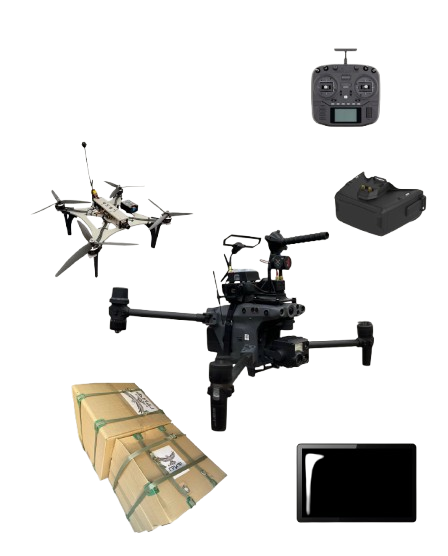
A complex with a Mavic charging station, a repeater and full support for combat missions.
Warning: Undefined array key 1 in /home/hryf/drongrif.com/www/wp-content/themes/Proacto-Theme/template-parts/blocks/pr-products-sidebar.php on line 40
0

FPV drone 10 for strike missions. Operating range up to 20+ km, combat load up to 3 kg. Ideal for mass use.
Warning: Undefined array key 1 in /home/hryf/drongrif.com/www/wp-content/themes/Proacto-Theme/template-parts/blocks/pr-products-sidebar.php on line 40
0

Powerful drone with anti-radar capabilities. ERLS system at frequencies of 520-2700 MHz. Combat load 2.5 kg, operational flight range — 25 km.
Warning: Undefined array key 1 in /home/hryf/drongrif.com/www/wp-content/themes/Proacto-Theme/template-parts/blocks/pr-products-sidebar.php on line 40
0
Frequently asked questions
-
What is EW in simple words?
To put it simply, it’s a battle in the radio spectrum. Electronic warfare can jam, distort, or intercept enemy signals (communications, navigation, and equipment control) while simultaneously protecting your own. It’s a kind of electronic “shield and sword.”
-
Can EW completely shoot down a drone?
Not literally. EW doesn’t physically shoot down a drone — it simply leaves it without communication or navigation. Then it all depends on the model: one will fall, another will hang, a third will return to the operator, and some will continue flying autonomously.
-
What electronic warfare tools does the military use?
The ideal set includes portable systems for infantry, mobile complexes for columns, stationary platforms for facilities, and specialized anti-drone solutions. At the highest level, strategic complexes capable of influencing the radio spectrum for hundreds of kilometers.